11 Stretching Exercises to Improve Flexibility and Boost Recovery
11 Stretching Exercises to Improve Flexibility and Boost Recovery
Published Date:
Published Date:
Last Updated:
Last Updated:

Maintaining optimal physical health requires more than just high-intensity training; it also demands a dedicated approach to recovery. Understanding how to improve flexibility is the missing link between hitting a plateau and achieving a significant physical breakthrough. While cardiovascular work and strength training are vital, the integration of stretching and flexibility ensures that your muscles remain resilient and your joints stay functional.
If you have been searching for a personal trainer to help refine your recovery strategy, you likely understand that a mobile body is a high-performing body. This guide provides eleven essential stretching exercises designed to enhance your range of motion and accelerate your results.
How Does Stretching Help with Flexibility?
To achieve lasting change in your physical capabilities, it is important to understand the mechanics behind stretches for flexibility.
Flexibility is the ability of a muscle to lengthen passively through a range of motion. When you incorporate consistent stretching exercises, you are not just pulling on muscle fibers; you are communicating with your nervous system to allow for greater movement.
A mobile foundation is particularly important for those embarking on a comprehensive body transformation. Better flexibility leads to better form in the gym, which ultimately yields superior results, whether your goal is to build lean muscle or improve overall cardiovascular health.
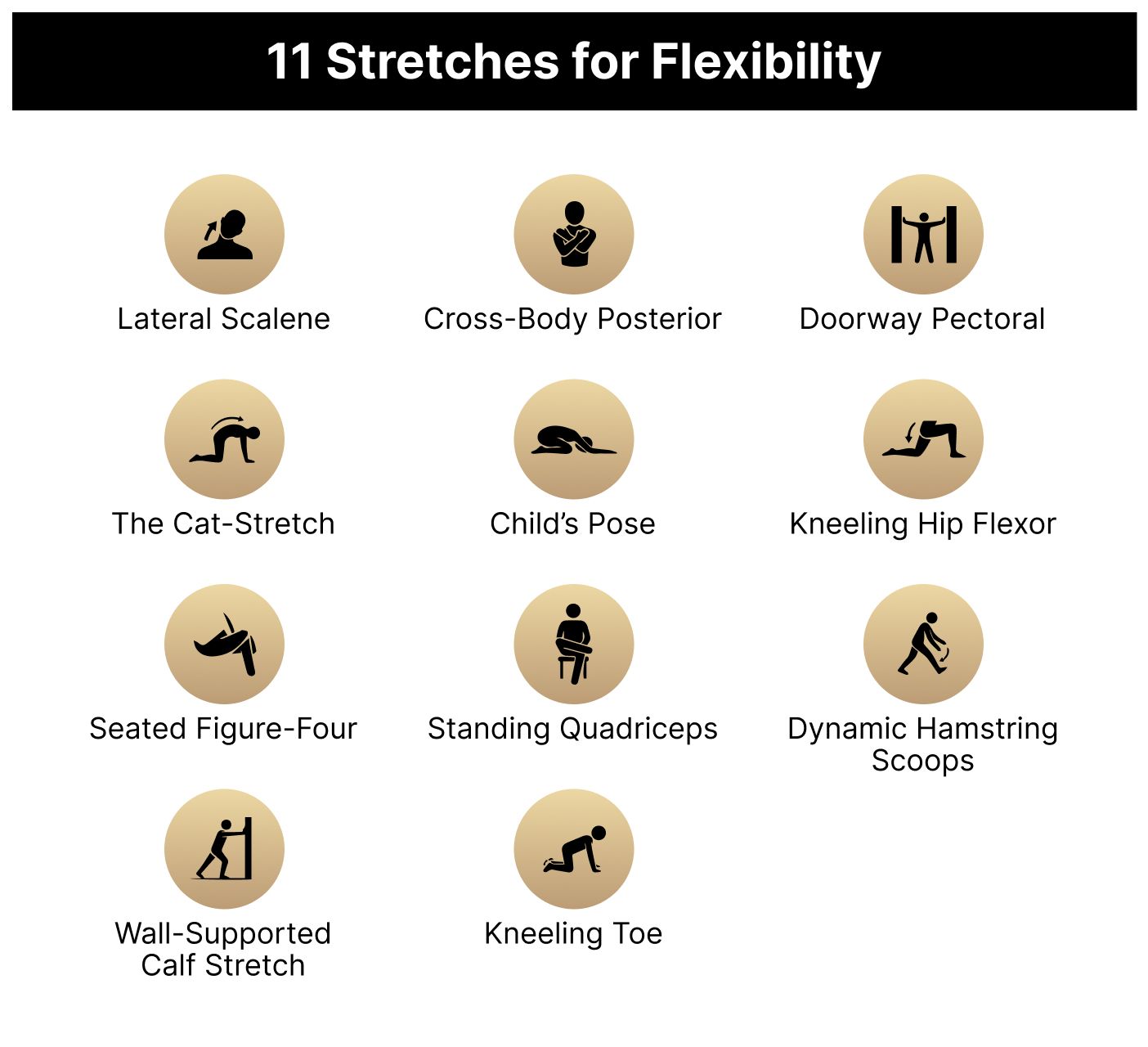
11 Stretches for Flexibility: A Head-to-Toe Guide
Upper Body Resilience
1. Neck: Lateral Scalene Stretch
Purpose: To address tension in the cervical spine and mitigate the "tech-neck" associated with modern office work.
The Example: Sit or stand tall and gently drop your right ear toward your right shoulder. For a deeper stretch, reach your left hand toward the floor while actively depressing your shoulder blade. This creates a longer lever for the stretch, reaching the deeper connective tissues that often cause tension headaches.
2. Shoulders: Cross-Body Posterior Stretch
Target Area: Deltoids and Rotator Cuff.
The Example: Pull one arm across your chest, using the other arm to gently increase the tension above the elbow. Be sure to keep your shoulders level and avoid shrugging toward your ears. This ensures the stretch stays focused on the posterior capsule of the shoulder joint rather than the upper traps.
3. Chest: Doorway Pectoral Stretch
Target Area: Pectoralis Major and Minor.
The Example: Place your forearms on either side of a door frame and gently lean forward. By adjusting the height of your elbows on the frame, you can target different fibers of the chest. Higher elbows focus on the lower pec, while lower elbows target the upper fibers near the collarbone.
4. Upper Back: The Cat-Stretch
Target Area: Rhomboids and Trapezius.
The Example: On all fours, tuck your chin and round your back toward the ceiling. Focus on breathing into the space between your shoulder blades. This physical expansion of the ribcage helps to manually stretch the intercostal muscles and the fascia of the mid-back from the inside out.
5. Lower Back: Child’s Pose
Target Area: Lumbar Spine and Latissimus Dorsi.
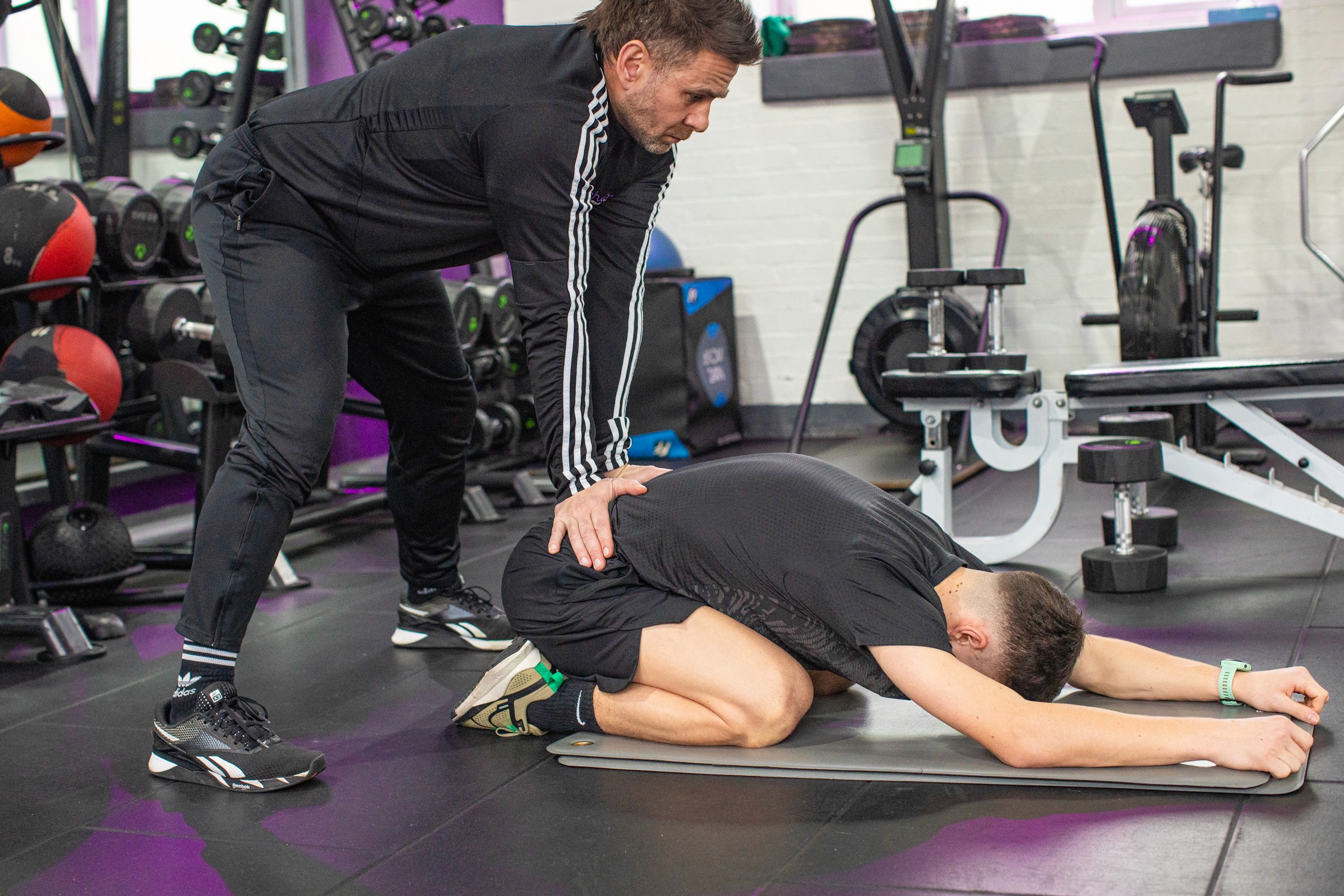
The Example: Kneel on the floor, sit back on your heels, and reach your arms forward. To target the lower back more specifically, walk your hands to one side and breathe into the opposite flank. This lateral stretch helps release the Quadratus Lumborum, a common culprit in chronic lower back tightness.
Lower Body & Core Mobility
6. Hips: Kneeling Hip Flexor Stretch
Target Area: Psoas and Iliacus.
The Example: From a half-kneeling position, tuck your pelvis under and lean slightly forward. The key is the "posterior pelvic tilt." By tucking your tailbone first, you ensure the stretch stays in the hip flexor rather than simply arching your lower back and bypassing the target muscle.
7. Glutes: Seated Figure-Four Stretch
Target Area: Piriformis and Gluteus Maximus.
The Example: While seated, cross your right ankle over your left knee and gently lean forward. Keep your chest high and your spine neutral. If you round your back, you lose the tension in the glute; keeping a flat back ensures the stretch originates deep within the hip socket.
8. Quads: Standing Quadriceps Stretch
Target Area: Front of the Thigh.
The Example: Stand on one leg and pull your opposite heel toward your glute. Ensure your knees stay glued together and your standing leg is slightly soft. This alignment prevents the hip from flaring outward, keeping the stretch squarely on the rectus femoris muscle.
9. Hamstrings: Dynamic Hamstring Scoops
Target Area: Posterior Thigh.
The Example: Extend one heel forward with a straight leg and "scoop" your hands toward the floor. This movement is superior to static stretching because it encourages blood flow and prepares the muscle for explosive movements. It mimics the natural lengthening of the hamstring during a stride.
10. Calves: Wall-Supported Gastrocnemius Stretch
Target Area: Lower Leg.
The Example: Place your hands on a wall and step one foot back, keeping the heel flat. To progress this stretch, slightly bend the back knee while keeping the heel down. This shifts the focus from the larger gastrocnemius to the deeper soleus muscle, which is vital for ankle stability.
11. Feet: Kneeling Toe Stretch
Target Area: Plantar Fascia.
The Example: Kneel on the floor with your toes tucked under and sit back on your heels. Most people neglect the feet, yet they are the foundation of every movement. Stretching the plantar fascia can improve everything from your balance to the power you generate during a heavy squat.
How to Improve Flexibility Safely
When performing these stretches for flexibility, the goal should be a mild sensation of tension rather than sharp pain. Consistency is the most important factor in seeing progress.
Warm Up First: Never stretch a cold muscle. A few minutes of light movement increases blood flow and prepares the tissue.
Control Your Breath: Use deep, rhythmic breathing to signal to the nervous system that it is safe to relax into the range of motion.
Avoid Bouncing: Use slow, controlled movements to avoid triggering the stretch reflex, which can cause muscles to contract rather than lengthen.
Prioritise Your Long-Term Physical Resilience
Developing a consistent routine centered on stretching exercises is a commitment to the long-term health and resilience of your body. By understanding how to improve flexibility, you empower yourself to train with greater intensity and recover more efficiently. This is about ensuring that every muscle group can perform its functional role without placing undue stress on the surrounding joints.
When flexibility is neglected, the body inevitably creates compensation patterns where one area overworks to make up for a lack of movement elsewhere, which is often the root cause of chronic fatigue and plateauing results.
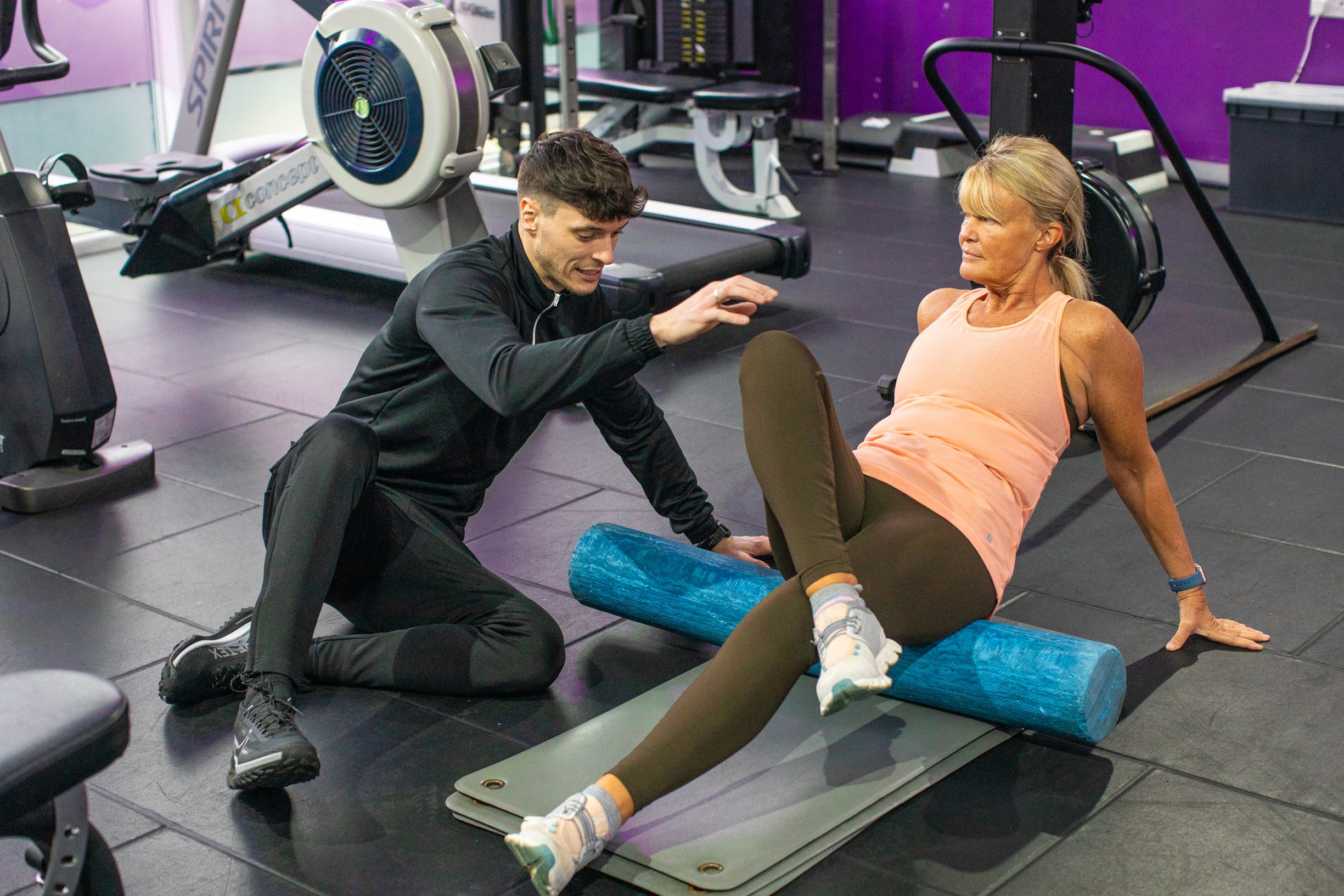
A balanced approach to movement is what ensures lasting success in any fitness journey. With the help of a personal trainer, consistent stretching and flexibility work will secure a more mobile and capable physique for years to come.
Maintaining optimal physical health requires more than just high-intensity training; it also demands a dedicated approach to recovery. Understanding how to improve flexibility is the missing link between hitting a plateau and achieving a significant physical breakthrough. While cardiovascular work and strength training are vital, the integration of stretching and flexibility ensures that your muscles remain resilient and your joints stay functional.
If you have been searching for a personal trainer to help refine your recovery strategy, you likely understand that a mobile body is a high-performing body. This guide provides eleven essential stretching exercises designed to enhance your range of motion and accelerate your results.
How Does Stretching Help with Flexibility?
To achieve lasting change in your physical capabilities, it is important to understand the mechanics behind stretches for flexibility.
Flexibility is the ability of a muscle to lengthen passively through a range of motion. When you incorporate consistent stretching exercises, you are not just pulling on muscle fibers; you are communicating with your nervous system to allow for greater movement.
A mobile foundation is particularly important for those embarking on a comprehensive body transformation. Better flexibility leads to better form in the gym, which ultimately yields superior results, whether your goal is to build lean muscle or improve overall cardiovascular health.
11 Stretches for Flexibility: A Head-to-Toe Guide
Upper Body Resilience
1. Neck: Lateral Scalene Stretch
Purpose: To address tension in the cervical spine and mitigate the "tech-neck" associated with modern office work.
The Example: Sit or stand tall and gently drop your right ear toward your right shoulder. For a deeper stretch, reach your left hand toward the floor while actively depressing your shoulder blade. This creates a longer lever for the stretch, reaching the deeper connective tissues that often cause tension headaches.
2. Shoulders: Cross-Body Posterior Stretch
Target Area: Deltoids and Rotator Cuff.
The Example: Pull one arm across your chest, using the other arm to gently increase the tension above the elbow. Be sure to keep your shoulders level and avoid shrugging toward your ears. This ensures the stretch stays focused on the posterior capsule of the shoulder joint rather than the upper traps.
3. Chest: Doorway Pectoral Stretch
Target Area: Pectoralis Major and Minor.
The Example: Place your forearms on either side of a door frame and gently lean forward. By adjusting the height of your elbows on the frame, you can target different fibers of the chest. Higher elbows focus on the lower pec, while lower elbows target the upper fibers near the collarbone.
4. Upper Back: The Cat-Stretch
Target Area: Rhomboids and Trapezius.
The Example: On all fours, tuck your chin and round your back toward the ceiling. Focus on breathing into the space between your shoulder blades. This physical expansion of the ribcage helps to manually stretch the intercostal muscles and the fascia of the mid-back from the inside out.
5. Lower Back: Child’s Pose
Target Area: Lumbar Spine and Latissimus Dorsi.
The Example: Kneel on the floor, sit back on your heels, and reach your arms forward. To target the lower back more specifically, walk your hands to one side and breathe into the opposite flank. This lateral stretch helps release the Quadratus Lumborum, a common culprit in chronic lower back tightness.
Lower Body & Core Mobility
6. Hips: Kneeling Hip Flexor Stretch
Target Area: Psoas and Iliacus.
The Example: From a half-kneeling position, tuck your pelvis under and lean slightly forward. The key is the "posterior pelvic tilt." By tucking your tailbone first, you ensure the stretch stays in the hip flexor rather than simply arching your lower back and bypassing the target muscle.
7. Glutes: Seated Figure-Four Stretch
Target Area: Piriformis and Gluteus Maximus.
The Example: While seated, cross your right ankle over your left knee and gently lean forward. Keep your chest high and your spine neutral. If you round your back, you lose the tension in the glute; keeping a flat back ensures the stretch originates deep within the hip socket.
8. Quads: Standing Quadriceps Stretch
Target Area: Front of the Thigh.
The Example: Stand on one leg and pull your opposite heel toward your glute. Ensure your knees stay glued together and your standing leg is slightly soft. This alignment prevents the hip from flaring outward, keeping the stretch squarely on the rectus femoris muscle.
9. Hamstrings: Dynamic Hamstring Scoops
Target Area: Posterior Thigh.
The Example: Extend one heel forward with a straight leg and "scoop" your hands toward the floor. This movement is superior to static stretching because it encourages blood flow and prepares the muscle for explosive movements. It mimics the natural lengthening of the hamstring during a stride.
10. Calves: Wall-Supported Gastrocnemius Stretch
Target Area: Lower Leg.
The Example: Place your hands on a wall and step one foot back, keeping the heel flat. To progress this stretch, slightly bend the back knee while keeping the heel down. This shifts the focus from the larger gastrocnemius to the deeper soleus muscle, which is vital for ankle stability.
11. Feet: Kneeling Toe Stretch
Target Area: Plantar Fascia.
The Example: Kneel on the floor with your toes tucked under and sit back on your heels. Most people neglect the feet, yet they are the foundation of every movement. Stretching the plantar fascia can improve everything from your balance to the power you generate during a heavy squat.
How to Improve Flexibility Safely
When performing these stretches for flexibility, the goal should be a mild sensation of tension rather than sharp pain. Consistency is the most important factor in seeing progress.
Warm Up First: Never stretch a cold muscle. A few minutes of light movement increases blood flow and prepares the tissue.
Control Your Breath: Use deep, rhythmic breathing to signal to the nervous system that it is safe to relax into the range of motion.
Avoid Bouncing: Use slow, controlled movements to avoid triggering the stretch reflex, which can cause muscles to contract rather than lengthen.
Prioritise Your Long-Term Physical Resilience
Developing a consistent routine centered on stretching exercises is a commitment to the long-term health and resilience of your body. By understanding how to improve flexibility, you empower yourself to train with greater intensity and recover more efficiently. This is about ensuring that every muscle group can perform its functional role without placing undue stress on the surrounding joints.
When flexibility is neglected, the body inevitably creates compensation patterns where one area overworks to make up for a lack of movement elsewhere, which is often the root cause of chronic fatigue and plateauing results.
A balanced approach to movement is what ensures lasting success in any fitness journey. With the help of a personal trainer, consistent stretching and flexibility work will secure a more mobile and capable physique for years to come.
Table of Content
Frequently Asked Questions
Frequently Asked Questions
How long should I hold each position for?
Can stretching and flexibility work help with muscle soreness?
How often should I focus on stretching exercises?
Is it possible to over-stretch a joint?
Why am I still stiff despite regular stretching?



Alchemy PT are UK’s number one personal trainers. Situated in central Wilmslow, we have over 2,000 square feet of space for our Personal Training Studio.
Call Us
Alchemy - © Copyright 2026 |
Website by ARENA
Alchemy PT are UK’s number one personal trainers. Situated in central Wilmslow, we have over 2,000 square feet of space for our Personal Training Studio.
Call Us
Alchemy - © Copyright 2026 |
Website by ARENA
Alchemy PT are UK’s number one personal trainers. Situated in central Wilmslow, we have over 2,000 square feet of space for our Personal Training Studio.
Call Us
Alchemy - © Copyright 2026 |
Website by ARENA
Alchemy PT are UK’s number one personal trainers. Situated in central Wilmslow, we have over 2,000 square feet of space for our Personal Training Studio.
Call Us
Alchemy - © Copyright 2026 |
Website by ARENA