PRIVATE GYM OPEN 7 DAYS A WEEK IN WILMSLOW AND ALDERLEY EDGE, CHESHIRE.

What Muscles Do Push-Ups Work? Benefits and Proper Form According to Personal Trainers

What Muscles Do Push-Ups Work? Benefits and Proper Form According to Personal Trainers

Dec 26, 2025

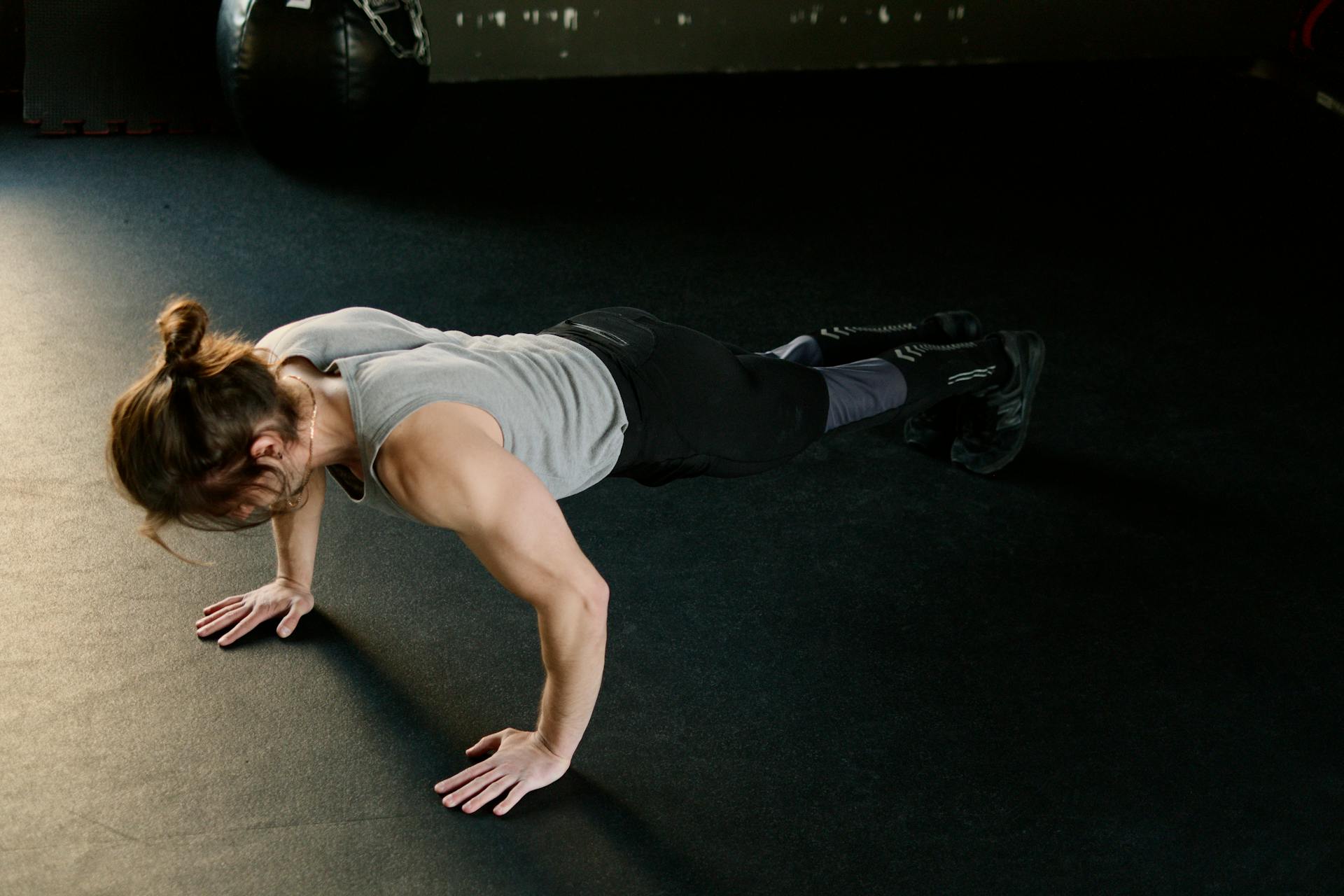
Alt text: A man with long hair and a grey top is performing a push-up on the dark gym floor.

Push-ups are one of the most classic and effective bodyweight exercises in fitness. You can do them without any equipment, just your own body and the floor. 

These exercises are often one of the most popular types of workouts done in schools, gyms, and even at home. They’re simple to do and easy to get the hang of. Because they require strength, stability, and coordination, they’re used by everyone, from beginners to professional athletes. 

In this guide, we’re going to talk all about push-ups, including what they are, what muscles they work, the main benefits, and more. 

What Are Push-Ups?

At their core, push-ups involve lowering and raising your body using your arms while keeping your body straight from head to heels. They can be modified for different fitness levels, with slight variations bringing significant changes. 

This makes them a versatile option for overall upper-body and core strength. From beginners to experienced personal trainers and athletes, push-ups are a popular recommendation. This routine is also one of the most effective inclusions we have added to our programmes

What Muscles Do Push-Ups Work?

While many refer to push-ups as a chest exercise, they’re actually an all-around workout routine. Here are the main muscles push-ups work: 

Primary Muscles Worked

Chest

Your chest muscles are the primary muscles responsible for this movement. The pectoralis major is the large, thick, fan-shaped muscle located beneath the breast tissue, while the pectoralis minor sits underneath it and helps stabilise the scapula. 

As you lower your body towards the floor, your chest works to control the descent and stop you from dropping too fast. 

This is known as the eccentric phase, in which the muscle lengthens while producing force. When you press back to rise up, the chest contracts and shortens, which is the concentric phase. 

Because push-ups involve a forward pressing motion, the pecs stay active throughout the full repetition. 

Triceps

The triceps brachii is a group of muscles push-ups work. They play a huge role because they straighten your elbows. It’s the large, three-headed muscle behind your upper arm, crucial for stabilising the shoulder. It consists of the long head, lateral head, and medial head. 

During the lowering portion of the rep, your triceps control how quickly your elbows bend as your body comes down.

On the way up, they generate enough force to extend the elbows and finish the push. This is especially so in the top half when you’re pressing into a straight-arm position. If your triceps are weaker than your chest, you may feel the stress in the arms first before the chest. 

Anterior Deltoids

The front section of your shoulder is another muscle push-ups work. Anterior deltoids support the pressing action and stabilise the shoulder joint, guiding and controlling the motion while keeping the shoulder in place. 

They also come in three heads: anterior, lateral, and posterior. These muscles are engaged when you lower down and press up, working with the chest and triceps to maintain control and keep the movement smooth. 

Secondary Muscles Worked

Core Muscles

Your core is another group of muscles push-ups work. Core muscles include the rectus abdominis, internal and external obliques, transverse abdominis, and pyramidalis. They work hard throughout to keep your body in a straight line and prevent sagging.

Serratus Anterior

The serratus anterior is a fan-shaped muscle located on the side of your chest, often called the “boxer’s muscle.” This muscle is especially important for pushing movements, allowing overhead arm movements and shoulder blade stability. 

Glutes and Quadriceps

Your lower body supports push-ups more than most people realise. The glutes contract to keep your hips aligned with your torso, while your legs stay engaged to maintain a rigid position from shoulders to heels. This helps make the movement stronger and smoother. 

Back

The rhomboids and trapezius muscles keep the shoulder blades stable while the latissimus dorsi muscles control downward motion. While they aren’t creating the main pushing force, they have a huge role in keeping the shoulders safe and stable. 

What Are the Benefits of Push-Ups?
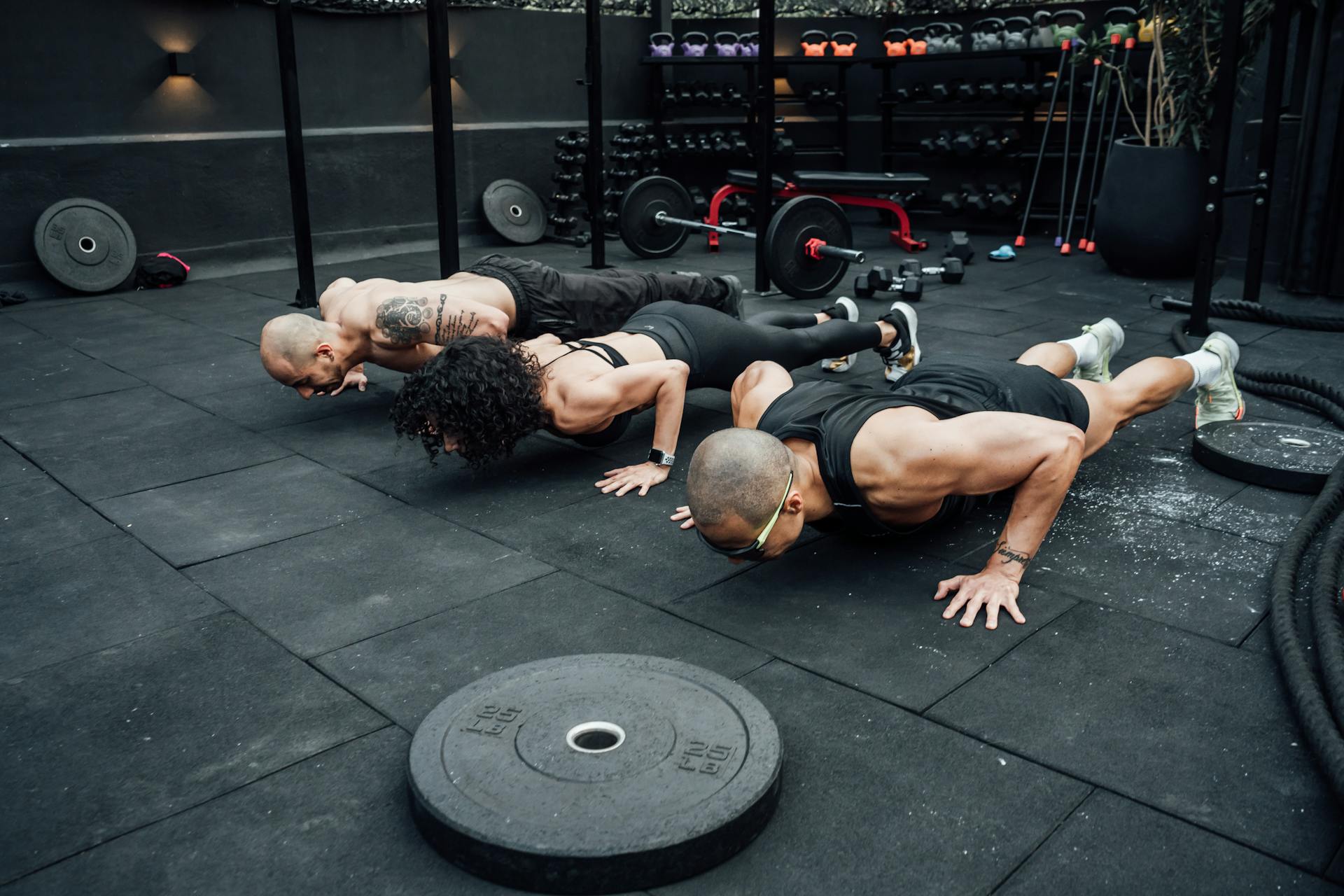
A group of people with dark fitness attire perform a push-up on the dark gym floor. 

Push-ups are one of the best bodyweight exercises because they build strength and control using a movement pattern that doesn’t require special equipment. 

Our personal trainers at our gyms in Knutsford, Wilmslow, and Alderley Edge all recommend doing this simple exercise at home because of the many benefits it offers. 

Builds Upper Body Strength

One of the many reasons why we recommend doing push-ups is because it builds upper body strength.

The muscles that push-ups work will benefit the most, including your chest, shoulders, and triceps. Because you’re moving your body weight, your muscles work together to control the pushing and lowering phases. This improves strength, muscle endurance, and performance. 

Improves Core Stability

Regular push-ups require active core stability to keep your body in a straight line. Your abs and obliques work to prevent your hips from sagging and your lower back from arching. This leads to improved bracing, posture, and full-body control for everyday movement. 

Supports Heart Health

Push-ups can also support heart health because they’re a form of physical exercise that utilises multiple muscles, raising your heart rate and increasing overall circulation. 

Consistent reps and workouts can reduce the risk of cardiovascular events, making them a good option for general fitness. However, we don’t recommend replacing dedicated cardio routines with push-ups. 

Easy to Do Anywhere

Push-ups are a form of exercise that can be done anywhere with a flat surface. Plus, they don’t require any fancy equipment. This makes them the perfect exercise at home, travel, or private training sessions. They’re also easy to stay consistent with. 

How to Do a Push Up with Proper Form

To properly target the muscles push-ups work, it’s important to do it the right way. If you’re having trouble with the correct form, our personal trainers can show you how to do it right at our private gym. We can also teach you several variations to target specific muscles. 

In the meantime, here’s a quick guide on how to do a push-up correctly:

  1. Set Up Your Position

Start in a high plank position with your hands flat on the floor and your arms straight. Place your hands shoulder-width apart, with fingers spread to have a strong base. Your shoulders should be slightly in front of your wrists, and your feet should be hip-width apart. 

  1. Engage Your Muscles

Before you even lower down, tighten your body like you’re bracing for a punch. Squeeze your glutes, engage your core, and keep your legs active. Make your body form a straight line from head to heels. 

  1. Lower Yourself

Bend your elbows slowly until your chest is close to the floor and inhale. Do this in a controlled, smooth motion without any sudden movements. Keep your neck neutral by looking slightly ahead. 

  1. Press Back Up

Push the floor away and return to the starting position, moving your body as one unit. Be firm, keep your core tight, and exhale. Avoid letting your back arch as you press up. Once you reach the top, your arms should be straight. 

  1. Repeat

You can repeat as much as you can, but remember not to overexert yourself. Slow and steady is always the right option. Too many reps can be counterproductive and make you prone to injury. Stick to what you can do and the reps you plan to do. You’ll gradually improve. 

Common Push-Up Variations
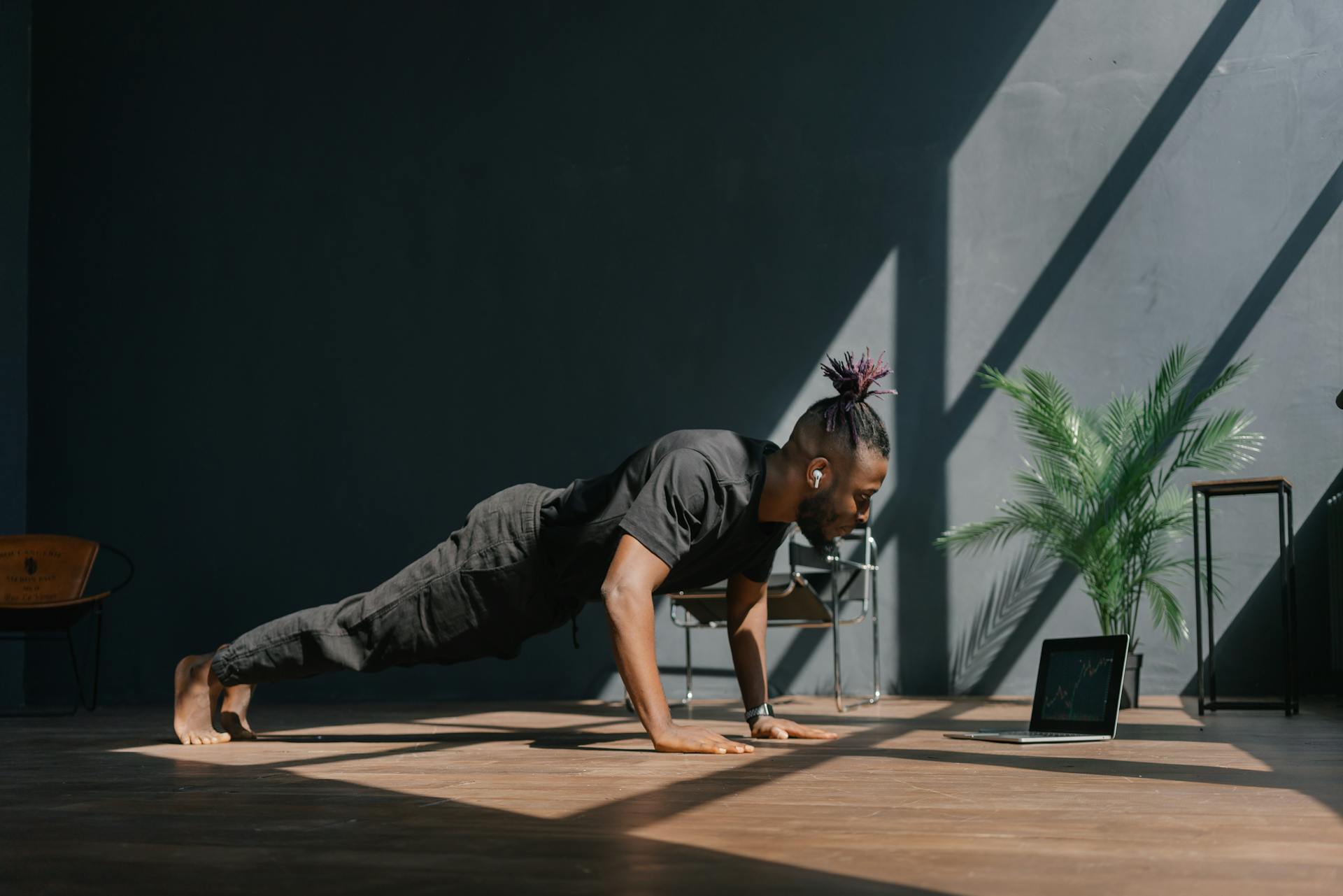
A man with dark clothes performs a push-up at home on a wooden floor next to a laptop.

Push-ups are simple to do, but they have slight variations depending on your position.

Standard Push-Ups

The classic variation that builds balanced strength across the upper body and core. Start with a high plank and hands outside the shoulders. Keep the body rigid and lower chest under control. Press back up in one straight line with arms straight. 

This targets the chest, triceps, shoulders, and core muscles. 

Knee Push-Ups

A beginner-friendly version that reduces the amount of bodyweight you’re pressing. Start in a plank position, then lower your knees to the floor. Keep your hands under your shoulders and lower your chest toward the floor. Press back up while staying controlled.

Incline Push-Ups

In this variation, the hands are elevated on a bench or box, making movement easier while keeping great form. Step your feet back so the body forms a straight line, then brace your core. Lower your chest toward the surface and press back up. 

Close-Grip Push-Ups

Set up like a standard push-up, but bring your hands closer together under your chest. Keep your elbows close to your ribs as you lower down. This targets the triceps more than the chest, shoulders, and core. 

Wide Push-Ups

This works just like a normal push-up, but with the hands placed wider than shoulder-width. Brace your core and lower your chest toward the floor with control. This push-up variation is meant for more chest focus. 

Common Push-Up Mistakes

While push-ups can be simple to do, they can be challenging at first, especially if you’re not used to them yet. Here are some common mistakes our personal trainers have encountered:

  • Hips sagging or piking up

  • Elbows flaring out

  • Shrugging shoulders

  • Not going low enough

  • Rushing reps

  • Hands are too far forward

  • Head dropping or looking up

Final Thoughts

Push-ups are a simple but powerful exercise that can work multiple muscles all at once, mainly the chest, triceps, and shoulders. They’re effective because they build real strength and body control without the use of any fancy equipment. 

Focus on good form, choose the right variation for you, and stay consistent. 

Push-ups are one of the most classic and effective bodyweight exercises in fitness. You can do them without any equipment, just your own body and the floor. 

These exercises are often one of the most popular types of workouts done in schools, gyms, and even at home. They’re simple to do and easy to get the hang of. Because they require strength, stability, and coordination, they’re used by everyone, from beginners to professional athletes. 

In this guide, we’re going to talk all about push-ups, including what they are, what muscles they work, the main benefits, and more. 

What Are Push-Ups?

At their core, push-ups involve lowering and raising your body using your arms while keeping your body straight from head to heels. They can be modified for different fitness levels, with slight variations bringing significant changes. 

This makes them a versatile option for overall upper-body and core strength. From beginners to experienced personal trainers and athletes, push-ups are a popular recommendation. This routine is also one of the most effective inclusions we have added to our programmes

What Muscles Do Push-Ups Work?

While many refer to push-ups as a chest exercise, they’re actually an all-around workout routine. Here are the main muscles push-ups work: 

Primary Muscles Worked

Chest

Your chest muscles are the primary muscles responsible for this movement. The pectoralis major is the large, thick, fan-shaped muscle located beneath the breast tissue, while the pectoralis minor sits underneath it and helps stabilise the scapula. 

As you lower your body towards the floor, your chest works to control the descent and stop you from dropping too fast. 

This is known as the eccentric phase, in which the muscle lengthens while producing force. When you press back to rise up, the chest contracts and shortens, which is the concentric phase. 

Because push-ups involve a forward pressing motion, the pecs stay active throughout the full repetition. 

Triceps

The triceps brachii is a group of muscles push-ups work. They play a huge role because they straighten your elbows. It’s the large, three-headed muscle behind your upper arm, crucial for stabilising the shoulder. It consists of the long head, lateral head, and medial head. 

During the lowering portion of the rep, your triceps control how quickly your elbows bend as your body comes down.

On the way up, they generate enough force to extend the elbows and finish the push. This is especially so in the top half when you’re pressing into a straight-arm position. If your triceps are weaker than your chest, you may feel the stress in the arms first before the chest. 

Anterior Deltoids

The front section of your shoulder is another muscle push-ups work. Anterior deltoids support the pressing action and stabilise the shoulder joint, guiding and controlling the motion while keeping the shoulder in place. 

They also come in three heads: anterior, lateral, and posterior. These muscles are engaged when you lower down and press up, working with the chest and triceps to maintain control and keep the movement smooth. 

Secondary Muscles Worked

Core Muscles

Your core is another group of muscles push-ups work. Core muscles include the rectus abdominis, internal and external obliques, transverse abdominis, and pyramidalis. They work hard throughout to keep your body in a straight line and prevent sagging.

Serratus Anterior

The serratus anterior is a fan-shaped muscle located on the side of your chest, often called the “boxer’s muscle.” This muscle is especially important for pushing movements, allowing overhead arm movements and shoulder blade stability. 

Glutes and Quadriceps

Your lower body supports push-ups more than most people realise. The glutes contract to keep your hips aligned with your torso, while your legs stay engaged to maintain a rigid position from shoulders to heels. This helps make the movement stronger and smoother. 

Back

The rhomboids and trapezius muscles keep the shoulder blades stable while the latissimus dorsi muscles control downward motion. While they aren’t creating the main pushing force, they have a huge role in keeping the shoulders safe and stable. 

What Are the Benefits of Push-Ups?

A group of people with dark fitness attire perform a push-up on the dark gym floor. 

Push-ups are one of the best bodyweight exercises because they build strength and control using a movement pattern that doesn’t require special equipment. 

Our personal trainers at our gyms in Knutsford, Wilmslow, and Alderley Edge all recommend doing this simple exercise at home because of the many benefits it offers. 

Builds Upper Body Strength

One of the many reasons why we recommend doing push-ups is because it builds upper body strength.

The muscles that push-ups work will benefit the most, including your chest, shoulders, and triceps. Because you’re moving your body weight, your muscles work together to control the pushing and lowering phases. This improves strength, muscle endurance, and performance. 

Improves Core Stability

Regular push-ups require active core stability to keep your body in a straight line. Your abs and obliques work to prevent your hips from sagging and your lower back from arching. This leads to improved bracing, posture, and full-body control for everyday movement. 

Supports Heart Health

Push-ups can also support heart health because they’re a form of physical exercise that utilises multiple muscles, raising your heart rate and increasing overall circulation. 

Consistent reps and workouts can reduce the risk of cardiovascular events, making them a good option for general fitness. However, we don’t recommend replacing dedicated cardio routines with push-ups. 

Easy to Do Anywhere

Push-ups are a form of exercise that can be done anywhere with a flat surface. Plus, they don’t require any fancy equipment. This makes them the perfect exercise at home, travel, or private training sessions. They’re also easy to stay consistent with. 

How to Do a Push Up with Proper Form

To properly target the muscles push-ups work, it’s important to do it the right way. If you’re having trouble with the correct form, our personal trainers can show you how to do it right at our private gym. We can also teach you several variations to target specific muscles. 

In the meantime, here’s a quick guide on how to do a push-up correctly:

  1. Set Up Your Position

Start in a high plank position with your hands flat on the floor and your arms straight. Place your hands shoulder-width apart, with fingers spread to have a strong base. Your shoulders should be slightly in front of your wrists, and your feet should be hip-width apart. 

  1. Engage Your Muscles

Before you even lower down, tighten your body like you’re bracing for a punch. Squeeze your glutes, engage your core, and keep your legs active. Make your body form a straight line from head to heels. 

  1. Lower Yourself

Bend your elbows slowly until your chest is close to the floor and inhale. Do this in a controlled, smooth motion without any sudden movements. Keep your neck neutral by looking slightly ahead. 

  1. Press Back Up

Push the floor away and return to the starting position, moving your body as one unit. Be firm, keep your core tight, and exhale. Avoid letting your back arch as you press up. Once you reach the top, your arms should be straight. 

  1. Repeat

You can repeat as much as you can, but remember not to overexert yourself. Slow and steady is always the right option. Too many reps can be counterproductive and make you prone to injury. Stick to what you can do and the reps you plan to do. You’ll gradually improve. 

Common Push-Up Variations

A man with dark clothes performs a push-up at home on a wooden floor next to a laptop.

Push-ups are simple to do, but they have slight variations depending on your position.

Standard Push-Ups

The classic variation that builds balanced strength across the upper body and core. Start with a high plank and hands outside the shoulders. Keep the body rigid and lower chest under control. Press back up in one straight line with arms straight. 

This targets the chest, triceps, shoulders, and core muscles. 

Knee Push-Ups

A beginner-friendly version that reduces the amount of bodyweight you’re pressing. Start in a plank position, then lower your knees to the floor. Keep your hands under your shoulders and lower your chest toward the floor. Press back up while staying controlled.

Incline Push-Ups

In this variation, the hands are elevated on a bench or box, making movement easier while keeping great form. Step your feet back so the body forms a straight line, then brace your core. Lower your chest toward the surface and press back up. 

Close-Grip Push-Ups

Set up like a standard push-up, but bring your hands closer together under your chest. Keep your elbows close to your ribs as you lower down. This targets the triceps more than the chest, shoulders, and core. 

Wide Push-Ups

This works just like a normal push-up, but with the hands placed wider than shoulder-width. Brace your core and lower your chest toward the floor with control. This push-up variation is meant for more chest focus. 

Common Push-Up Mistakes

While push-ups can be simple to do, they can be challenging at first, especially if you’re not used to them yet. Here are some common mistakes our personal trainers have encountered:

  • Hips sagging or piking up

  • Elbows flaring out

  • Shrugging shoulders

  • Not going low enough

  • Rushing reps

  • Hands are too far forward

  • Head dropping or looking up

Final Thoughts

Push-ups are a simple but powerful exercise that can work multiple muscles all at once, mainly the chest, triceps, and shoulders. They’re effective because they build real strength and body control without the use of any fancy equipment. 

Focus on good form, choose the right variation for you, and stay consistent. 

Push-ups are one of the most classic and effective bodyweight exercises in fitness. You can do them without any equipment, just your own body and the floor. 

These exercises are often one of the most popular types of workouts done in schools, gyms, and even at home. They’re simple to do and easy to get the hang of. Because they require strength, stability, and coordination, they’re used by everyone, from beginners to professional athletes. 

In this guide, we’re going to talk all about push-ups, including what they are, what muscles they work, the main benefits, and more. 

What Are Push-Ups?

At their core, push-ups involve lowering and raising your body using your arms while keeping your body straight from head to heels. They can be modified for different fitness levels, with slight variations bringing significant changes. 

This makes them a versatile option for overall upper-body and core strength. From beginners to experienced personal trainers and athletes, push-ups are a popular recommendation. This routine is also one of the most effective inclusions we have added to our programmes

What Muscles Do Push-Ups Work?

While many refer to push-ups as a chest exercise, they’re actually an all-around workout routine. Here are the main muscles push-ups work: 

Primary Muscles Worked

Chest

Your chest muscles are the primary muscles responsible for this movement. The pectoralis major is the large, thick, fan-shaped muscle located beneath the breast tissue, while the pectoralis minor sits underneath it and helps stabilise the scapula. 

As you lower your body towards the floor, your chest works to control the descent and stop you from dropping too fast. 

This is known as the eccentric phase, in which the muscle lengthens while producing force. When you press back to rise up, the chest contracts and shortens, which is the concentric phase. 

Because push-ups involve a forward pressing motion, the pecs stay active throughout the full repetition. 

Triceps

The triceps brachii is a group of muscles push-ups work. They play a huge role because they straighten your elbows. It’s the large, three-headed muscle behind your upper arm, crucial for stabilising the shoulder. It consists of the long head, lateral head, and medial head. 

During the lowering portion of the rep, your triceps control how quickly your elbows bend as your body comes down.

On the way up, they generate enough force to extend the elbows and finish the push. This is especially so in the top half when you’re pressing into a straight-arm position. If your triceps are weaker than your chest, you may feel the stress in the arms first before the chest. 

Anterior Deltoids

The front section of your shoulder is another muscle push-ups work. Anterior deltoids support the pressing action and stabilise the shoulder joint, guiding and controlling the motion while keeping the shoulder in place. 

They also come in three heads: anterior, lateral, and posterior. These muscles are engaged when you lower down and press up, working with the chest and triceps to maintain control and keep the movement smooth. 

Secondary Muscles Worked

Core Muscles

Your core is another group of muscles push-ups work. Core muscles include the rectus abdominis, internal and external obliques, transverse abdominis, and pyramidalis. They work hard throughout to keep your body in a straight line and prevent sagging.

Serratus Anterior

The serratus anterior is a fan-shaped muscle located on the side of your chest, often called the “boxer’s muscle.” This muscle is especially important for pushing movements, allowing overhead arm movements and shoulder blade stability. 

Glutes and Quadriceps

Your lower body supports push-ups more than most people realise. The glutes contract to keep your hips aligned with your torso, while your legs stay engaged to maintain a rigid position from shoulders to heels. This helps make the movement stronger and smoother. 

Back

The rhomboids and trapezius muscles keep the shoulder blades stable while the latissimus dorsi muscles control downward motion. While they aren’t creating the main pushing force, they have a huge role in keeping the shoulders safe and stable. 

What Are the Benefits of Push-Ups?

A group of people with dark fitness attire perform a push-up on the dark gym floor. 

Push-ups are one of the best bodyweight exercises because they build strength and control using a movement pattern that doesn’t require special equipment. 

Our personal trainers at our gyms in Knutsford, Wilmslow, and Alderley Edge all recommend doing this simple exercise at home because of the many benefits it offers. 

Builds Upper Body Strength

One of the many reasons why we recommend doing push-ups is because it builds upper body strength.

The muscles that push-ups work will benefit the most, including your chest, shoulders, and triceps. Because you’re moving your body weight, your muscles work together to control the pushing and lowering phases. This improves strength, muscle endurance, and performance. 

Improves Core Stability

Regular push-ups require active core stability to keep your body in a straight line. Your abs and obliques work to prevent your hips from sagging and your lower back from arching. This leads to improved bracing, posture, and full-body control for everyday movement. 

Supports Heart Health

Push-ups can also support heart health because they’re a form of physical exercise that utilises multiple muscles, raising your heart rate and increasing overall circulation. 

Consistent reps and workouts can reduce the risk of cardiovascular events, making them a good option for general fitness. However, we don’t recommend replacing dedicated cardio routines with push-ups. 

Easy to Do Anywhere

Push-ups are a form of exercise that can be done anywhere with a flat surface. Plus, they don’t require any fancy equipment. This makes them the perfect exercise at home, travel, or private training sessions. They’re also easy to stay consistent with. 

How to Do a Push Up with Proper Form

To properly target the muscles push-ups work, it’s important to do it the right way. If you’re having trouble with the correct form, our personal trainers can show you how to do it right at our private gym. We can also teach you several variations to target specific muscles. 

In the meantime, here’s a quick guide on how to do a push-up correctly:

  1. Set Up Your Position

Start in a high plank position with your hands flat on the floor and your arms straight. Place your hands shoulder-width apart, with fingers spread to have a strong base. Your shoulders should be slightly in front of your wrists, and your feet should be hip-width apart. 

  1. Engage Your Muscles

Before you even lower down, tighten your body like you’re bracing for a punch. Squeeze your glutes, engage your core, and keep your legs active. Make your body form a straight line from head to heels. 

  1. Lower Yourself

Bend your elbows slowly until your chest is close to the floor and inhale. Do this in a controlled, smooth motion without any sudden movements. Keep your neck neutral by looking slightly ahead. 

  1. Press Back Up

Push the floor away and return to the starting position, moving your body as one unit. Be firm, keep your core tight, and exhale. Avoid letting your back arch as you press up. Once you reach the top, your arms should be straight. 

  1. Repeat

You can repeat as much as you can, but remember not to overexert yourself. Slow and steady is always the right option. Too many reps can be counterproductive and make you prone to injury. Stick to what you can do and the reps you plan to do. You’ll gradually improve. 

Common Push-Up Variations

A man with dark clothes performs a push-up at home on a wooden floor next to a laptop.

Push-ups are simple to do, but they have slight variations depending on your position.

Standard Push-Ups

The classic variation that builds balanced strength across the upper body and core. Start with a high plank and hands outside the shoulders. Keep the body rigid and lower chest under control. Press back up in one straight line with arms straight. 

This targets the chest, triceps, shoulders, and core muscles. 

Knee Push-Ups

A beginner-friendly version that reduces the amount of bodyweight you’re pressing. Start in a plank position, then lower your knees to the floor. Keep your hands under your shoulders and lower your chest toward the floor. Press back up while staying controlled.

Incline Push-Ups

In this variation, the hands are elevated on a bench or box, making movement easier while keeping great form. Step your feet back so the body forms a straight line, then brace your core. Lower your chest toward the surface and press back up. 

Close-Grip Push-Ups

Set up like a standard push-up, but bring your hands closer together under your chest. Keep your elbows close to your ribs as you lower down. This targets the triceps more than the chest, shoulders, and core. 

Wide Push-Ups

This works just like a normal push-up, but with the hands placed wider than shoulder-width. Brace your core and lower your chest toward the floor with control. This push-up variation is meant for more chest focus. 

Common Push-Up Mistakes

While push-ups can be simple to do, they can be challenging at first, especially if you’re not used to them yet. Here are some common mistakes our personal trainers have encountered:

  • Hips sagging or piking up

  • Elbows flaring out

  • Shrugging shoulders

  • Not going low enough

  • Rushing reps

  • Hands are too far forward

  • Head dropping or looking up

Final Thoughts

Push-ups are a simple but powerful exercise that can work multiple muscles all at once, mainly the chest, triceps, and shoulders. They’re effective because they build real strength and body control without the use of any fancy equipment. 

Focus on good form, choose the right variation for you, and stay consistent. 

Push-ups are one of the most classic and effective bodyweight exercises in fitness. You can do them without any equipment, just your own body and the floor. 

These exercises are often one of the most popular types of workouts done in schools, gyms, and even at home. They’re simple to do and easy to get the hang of. Because they require strength, stability, and coordination, they’re used by everyone, from beginners to professional athletes. 

In this guide, we’re going to talk all about push-ups, including what they are, what muscles they work, the main benefits, and more. 

What Are Push-Ups?

At their core, push-ups involve lowering and raising your body using your arms while keeping your body straight from head to heels. They can be modified for different fitness levels, with slight variations bringing significant changes. 

This makes them a versatile option for overall upper-body and core strength. From beginners to experienced personal trainers and athletes, push-ups are a popular recommendation. This routine is also one of the most effective inclusions we have added to our programmes

What Muscles Do Push-Ups Work?

While many refer to push-ups as a chest exercise, they’re actually an all-around workout routine. Here are the main muscles push-ups work: 

Primary Muscles Worked

Chest

Your chest muscles are the primary muscles responsible for this movement. The pectoralis major is the large, thick, fan-shaped muscle located beneath the breast tissue, while the pectoralis minor sits underneath it and helps stabilise the scapula. 

As you lower your body towards the floor, your chest works to control the descent and stop you from dropping too fast. 

This is known as the eccentric phase, in which the muscle lengthens while producing force. When you press back to rise up, the chest contracts and shortens, which is the concentric phase. 

Because push-ups involve a forward pressing motion, the pecs stay active throughout the full repetition. 

Triceps

The triceps brachii is a group of muscles push-ups work. They play a huge role because they straighten your elbows. It’s the large, three-headed muscle behind your upper arm, crucial for stabilising the shoulder. It consists of the long head, lateral head, and medial head. 

During the lowering portion of the rep, your triceps control how quickly your elbows bend as your body comes down.

On the way up, they generate enough force to extend the elbows and finish the push. This is especially so in the top half when you’re pressing into a straight-arm position. If your triceps are weaker than your chest, you may feel the stress in the arms first before the chest. 

Anterior Deltoids

The front section of your shoulder is another muscle push-ups work. Anterior deltoids support the pressing action and stabilise the shoulder joint, guiding and controlling the motion while keeping the shoulder in place. 

They also come in three heads: anterior, lateral, and posterior. These muscles are engaged when you lower down and press up, working with the chest and triceps to maintain control and keep the movement smooth. 

Secondary Muscles Worked

Core Muscles

Your core is another group of muscles push-ups work. Core muscles include the rectus abdominis, internal and external obliques, transverse abdominis, and pyramidalis. They work hard throughout to keep your body in a straight line and prevent sagging.

Serratus Anterior

The serratus anterior is a fan-shaped muscle located on the side of your chest, often called the “boxer’s muscle.” This muscle is especially important for pushing movements, allowing overhead arm movements and shoulder blade stability. 

Glutes and Quadriceps

Your lower body supports push-ups more than most people realise. The glutes contract to keep your hips aligned with your torso, while your legs stay engaged to maintain a rigid position from shoulders to heels. This helps make the movement stronger and smoother. 

Back

The rhomboids and trapezius muscles keep the shoulder blades stable while the latissimus dorsi muscles control downward motion. While they aren’t creating the main pushing force, they have a huge role in keeping the shoulders safe and stable. 

What Are the Benefits of Push-Ups?

A group of people with dark fitness attire perform a push-up on the dark gym floor. 

Push-ups are one of the best bodyweight exercises because they build strength and control using a movement pattern that doesn’t require special equipment. 

Our personal trainers at our gyms in Knutsford, Wilmslow, and Alderley Edge all recommend doing this simple exercise at home because of the many benefits it offers. 

Builds Upper Body Strength

One of the many reasons why we recommend doing push-ups is because it builds upper body strength.

The muscles that push-ups work will benefit the most, including your chest, shoulders, and triceps. Because you’re moving your body weight, your muscles work together to control the pushing and lowering phases. This improves strength, muscle endurance, and performance. 

Improves Core Stability

Regular push-ups require active core stability to keep your body in a straight line. Your abs and obliques work to prevent your hips from sagging and your lower back from arching. This leads to improved bracing, posture, and full-body control for everyday movement. 

Supports Heart Health

Push-ups can also support heart health because they’re a form of physical exercise that utilises multiple muscles, raising your heart rate and increasing overall circulation. 

Consistent reps and workouts can reduce the risk of cardiovascular events, making them a good option for general fitness. However, we don’t recommend replacing dedicated cardio routines with push-ups. 

Easy to Do Anywhere

Push-ups are a form of exercise that can be done anywhere with a flat surface. Plus, they don’t require any fancy equipment. This makes them the perfect exercise at home, travel, or private training sessions. They’re also easy to stay consistent with. 

How to Do a Push Up with Proper Form

To properly target the muscles push-ups work, it’s important to do it the right way. If you’re having trouble with the correct form, our personal trainers can show you how to do it right at our private gym. We can also teach you several variations to target specific muscles. 

In the meantime, here’s a quick guide on how to do a push-up correctly:

  1. Set Up Your Position

Start in a high plank position with your hands flat on the floor and your arms straight. Place your hands shoulder-width apart, with fingers spread to have a strong base. Your shoulders should be slightly in front of your wrists, and your feet should be hip-width apart. 

  1. Engage Your Muscles

Before you even lower down, tighten your body like you’re bracing for a punch. Squeeze your glutes, engage your core, and keep your legs active. Make your body form a straight line from head to heels. 

  1. Lower Yourself

Bend your elbows slowly until your chest is close to the floor and inhale. Do this in a controlled, smooth motion without any sudden movements. Keep your neck neutral by looking slightly ahead. 

  1. Press Back Up

Push the floor away and return to the starting position, moving your body as one unit. Be firm, keep your core tight, and exhale. Avoid letting your back arch as you press up. Once you reach the top, your arms should be straight. 

  1. Repeat

You can repeat as much as you can, but remember not to overexert yourself. Slow and steady is always the right option. Too many reps can be counterproductive and make you prone to injury. Stick to what you can do and the reps you plan to do. You’ll gradually improve. 

Common Push-Up Variations

A man with dark clothes performs a push-up at home on a wooden floor next to a laptop.

Push-ups are simple to do, but they have slight variations depending on your position.

Standard Push-Ups

The classic variation that builds balanced strength across the upper body and core. Start with a high plank and hands outside the shoulders. Keep the body rigid and lower chest under control. Press back up in one straight line with arms straight. 

This targets the chest, triceps, shoulders, and core muscles. 

Knee Push-Ups

A beginner-friendly version that reduces the amount of bodyweight you’re pressing. Start in a plank position, then lower your knees to the floor. Keep your hands under your shoulders and lower your chest toward the floor. Press back up while staying controlled.

Incline Push-Ups

In this variation, the hands are elevated on a bench or box, making movement easier while keeping great form. Step your feet back so the body forms a straight line, then brace your core. Lower your chest toward the surface and press back up. 

Close-Grip Push-Ups

Set up like a standard push-up, but bring your hands closer together under your chest. Keep your elbows close to your ribs as you lower down. This targets the triceps more than the chest, shoulders, and core. 

Wide Push-Ups

This works just like a normal push-up, but with the hands placed wider than shoulder-width. Brace your core and lower your chest toward the floor with control. This push-up variation is meant for more chest focus. 

Common Push-Up Mistakes

While push-ups can be simple to do, they can be challenging at first, especially if you’re not used to them yet. Here are some common mistakes our personal trainers have encountered:

  • Hips sagging or piking up

  • Elbows flaring out

  • Shrugging shoulders

  • Not going low enough

  • Rushing reps

  • Hands are too far forward

  • Head dropping or looking up

Final Thoughts

Push-ups are a simple but powerful exercise that can work multiple muscles all at once, mainly the chest, triceps, and shoulders. They’re effective because they build real strength and body control without the use of any fancy equipment. 

Focus on good form, choose the right variation for you, and stay consistent. 

Frequently Asked Questions

Frequently Asked Questions

Will my arms get bigger if I do push-ups?
Is it OK to do push-ups every day?
Do pushups reduce belly fat?
Is the plank better than the push-up?
Can push-ups build the chest?
Will my arms get bigger if I do push-ups?
Is it OK to do push-ups every day?
Do pushups reduce belly fat?
Is the plank better than the push-up?
Can push-ups build the chest?
Will my arms get bigger if I do push-ups?
Is it OK to do push-ups every day?
Do pushups reduce belly fat?
Is the plank better than the push-up?
Can push-ups build the chest?
Will my arms get bigger if I do push-ups?
Is it OK to do push-ups every day?
Do pushups reduce belly fat?
Is the plank better than the push-up?
Can push-ups build the chest?
Alchemy Logo

Alchemy PT are UK’s number one personal trainers. Situated in central Wilmslow and Alderley Edge, Cheshire, we have over 2,000 square feet of space for our Personal Training Studio.

WhatsApp Us

Alchemy - © Copyright 2026

Website by ARENA

Alchemy Logo

Alchemy PT are UK’s number one personal trainers. Situated in central Wilmslow and Alderley Edge, Cheshire, we have over 2,000 square feet of space for our Personal Training Studio.

WhatsApp Us

Alchemy - © Copyright 2026

Website by ARENA

Alchemy Logo

Alchemy PT are UK’s number one personal trainers. Situated in central Wilmslow and Alderley Edge, Cheshire, we have over 2,000 square feet of space for our Personal Training Studio.

WhatsApp Us

Alchemy - © Copyright 2026

Website by ARENA

Alchemy Logo

Alchemy PT are UK’s number one personal trainers. Situated in central Wilmslow and Alderley Edge, Cheshire, we have over 2,000 square feet of space for our Personal Training Studio.

WhatsApp Us

Alchemy - © Copyright 2026

Website by ARENA