How to Tone Arms: 11 Top Exercises and Tips from Personal Trainers
How to Tone Arms: 11 Top Exercises and Tips from Personal Trainers
Published Date:
Published Date:
Last Updated:
Last Updated:
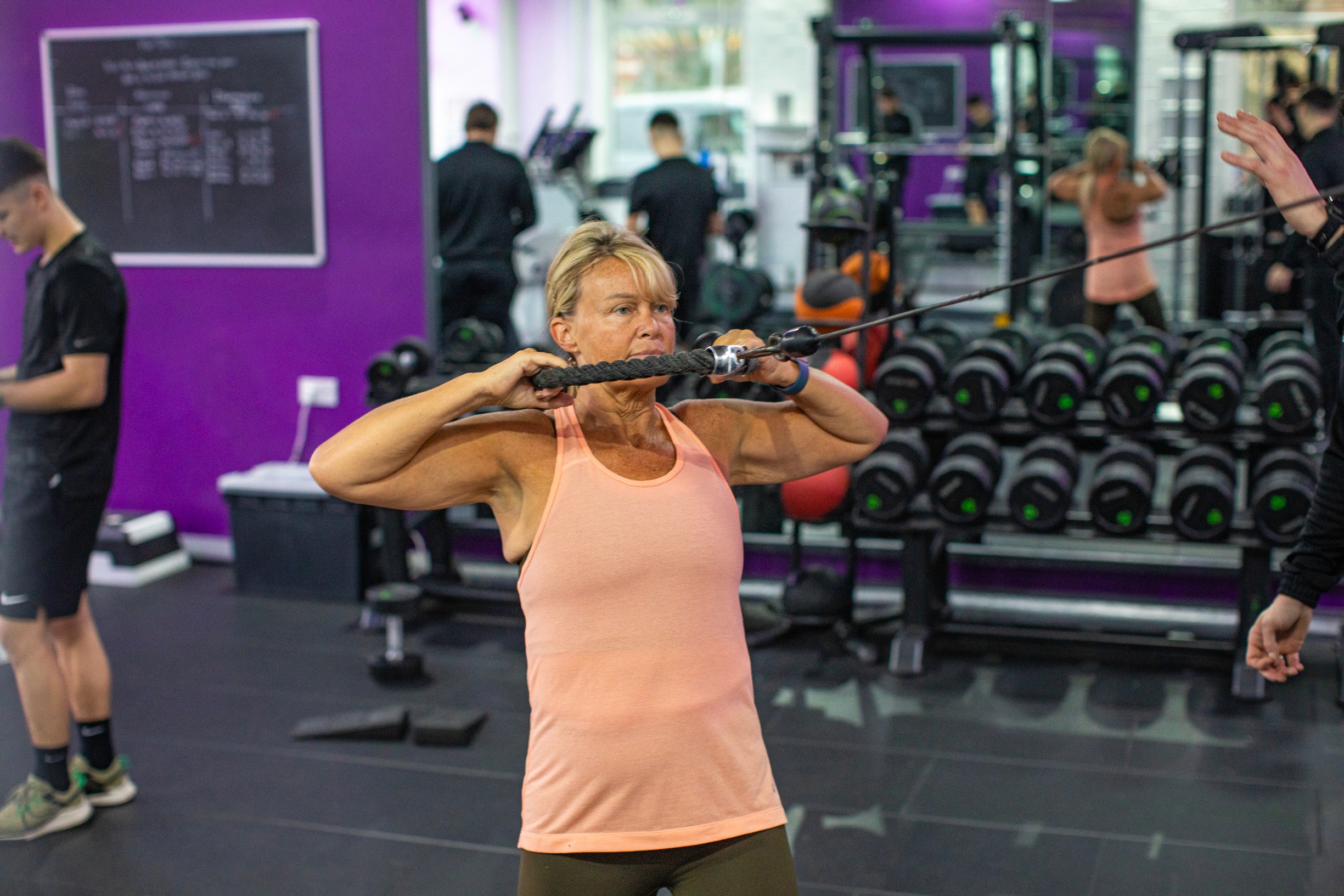
Well-defined arms are not just about appearance; they support everyday strength for lifting, reaching, and carrying, while improving the mobility and overall shape of your arms.
However, achieving this balance of power and form requires the right approach. Many people find it confusing to know which exercises work best or how to structure a routine.
We totally get it. As personal trainers, we have members across Wilmslow and Alderley Edge coming to us for a clear and guided plan for arm toning.
The good news? It’s more attainable than you think. The better news? You don’t need extreme workouts to get there. Read along for easy, expert-approved ways and tips to get you started.
What Toned Arms Really Mean
When we talk about toned arms, it’s not about looking like a bodybuilder. Many people worry that lifting weights or doing targeted arm exercises will make them bulky, but that’s not how most bodies respond, especially for women.
Toning your arms is about creating lean muscle definition, improving strength, and enhancing their overall shape. Think of it like sculpting. It’s a balanced combination of fat reduction and muscle growth to make your arms firmer while maintaining their natural proportion.
What Happens When You Train Your Arms Properly
Strong, toned arms do more than look good. Effective training triggers several positive changes, like:
Enhanced posture: Sturdy arms and shoulders support your upper body, reducing strain in your back and neck.
Increased endurance: You can perform repetitive arm movements longer without tiring.
Smoother movements: Tasks that require arm coordination feel more unrestricted.
Prevent injuries: Toned arms and supporting muscles reduce the risks of overuse strains.
Mental boost: Completing workouts gives a sense of achievement, and seeing results can help you feel motivated and proactive about your health.
11 Most Effective Arm Toning Exercises
The following exercises are chosen to develop your arms from every angle. We’ll walk you through exactly what each movement does, how to execute with proper form, and how to safely progress.
Push-ups
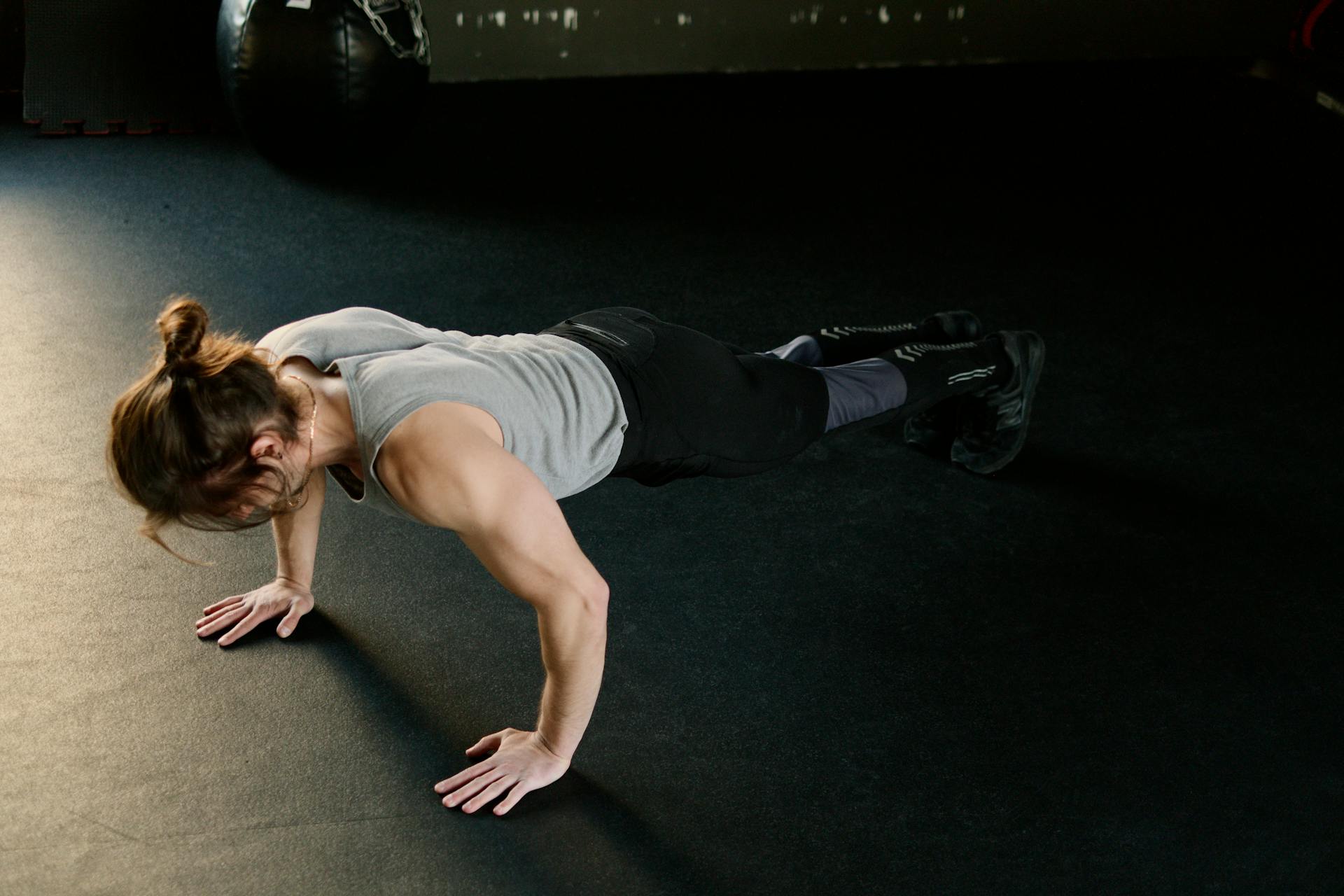
A timeless favourite. Push-ups work your chest, shoulders, and arms simultaneously while bracing your abs. Maintain a straight line from head to heels, lowering your chest to the floor before pressing back up. Modifications like knee or incline push-ups make it accessible if you are new to this, and elevating your feet or adding a pause to increase the challenge.
Bicep Curls
Biceps curls focus on the front of your upper arms, improving functional strength to help lift and carry everyday objects. Stand with your feet shoulder-width apart and hold dumbbells at your sides. Keep your elbows close to your torso and curl the weights up slowly. Lower the weights under control to maintain muscle tension.
If dumbbells are unavailable, you can use a resistance band or even household items like water bottles.
Tricep Dips
This exercise is the go-to for sculpting the back of your arms, an area prone to sagging. Sit on a sturdy chair or bench and place your hands just outside your hips. Slide forward and lower your body until your elbows reach 90 degrees, then press back up. Keep your shoulders down and elbows tucked in. You can adjust the difficulty by bending your knees or straightening them.
Overhead Tricep Extension
A foundational tricep strengthening movement. This move focuses on the back of your arms while engaging your shoulders for stability. Hold a dumbbell, kettlebell, or resistance band and lower it slowly behind your head. Extend back up while keeping your core activated to avoid lower-back pain.
If you are a beginner, start with a light weight to maintain proper form, and eventually move to the single-arm version to increase the challenge and improve balance.
Lateral Raises
Lateral raises contract the deltoids to improve arm regulation and upper-body coordination. Stand with light dumbbells at your sides, raise your arms to shoulder height, then lower slowly. Keep a slight bend in your elbows to reduce joint stress. Small, precise lifts prevent injury and allow the shoulder muscles to activate fully.
Alternating Military Press
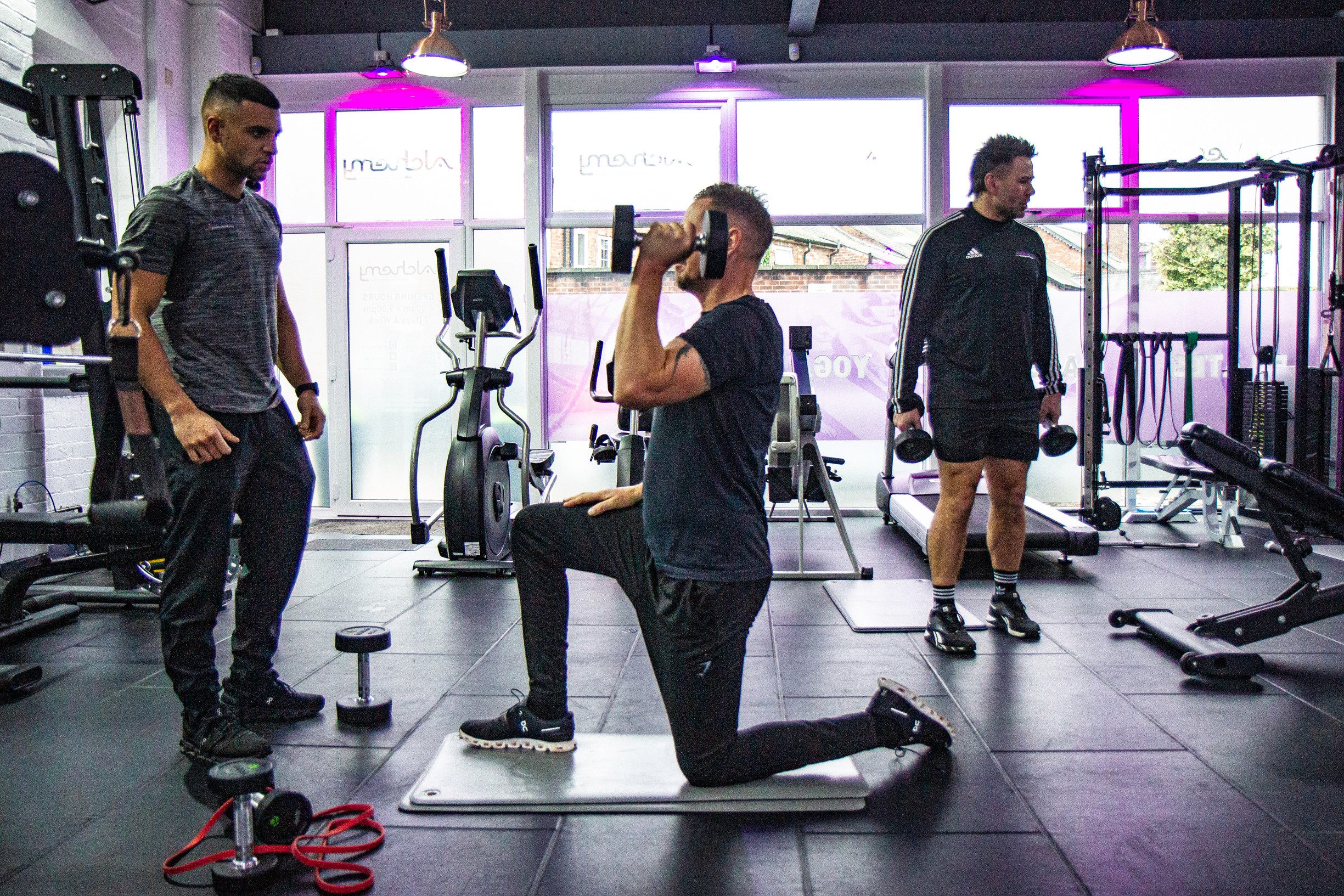
This exercise develops shoulder strength and enhances upper-arm stability through unilateral movement. Hold a weight in each hand at shoulder height, palms forward, and press one arm overhead while keeping the other bent, then switch. Beginners can start seated for support, while standing adds core engagement. Move slowly and focus on the weights to protect joints from straining.
Hammer Curls
A twist on the standard curl, hammer curls target both the biceps and the forearms and improve grip strength. Hold weights with palms facing each other, curl upwards, and lower slowly. To progress, try heavier weights or alternating arms, ensuring full control throughout the movements.
Cactus Arm
Think of opening a book with your arms. Bend your elbows at 90 degrees and lift them to shoulder height, forming a “goalpost” shape, then squeeze your shoulder blades together. This action engages the upper back and shoulder while improving posture.
Tricep Kickbacks
Tricep kickbacks are a great exercise to firm up the back arms while working on the torso for balance. Lean slightly forward with a straight back, keep your elbows tucked close to your body, then extend your arms behind you, pause, and lower slowly.
If you haven’t tried this routine before, start with low resistance, transitioning gradually into an advanced way by adding small pulses during lifts.
Curtsy Lunge with Bicep Curl
A full combo that keeps arms moving while challenging your legs. Step one leg diagonally behind you into a curtsy lunge while performing a bicep curl. Push back to standing by pushing the front heel, then switch sides.
This exercise challenges base support, strengthens glutes and quads, and activates your biceps simultaneously. For maximum effectiveness, keep your torso upright and regulated throughout
Pull-Aparts

Full stretch, major gain. Pull-aparts target the shoulder and upper back while enhancing arm control. Hold a band at chest level, pull until your arms are wide, then return slowly. Adjust the thickness of bands or weights of the machine to increase tension.
Expert Tips from Personal Trainers for Arm Toning
Simply going through every exercise is not enough to see meaningful results. Toned arms are effectively built from combining focused movement with smart pacing, complementary movements, and recovery.
Here are some tips our personal trainers consistently advise to get the most out of your arm toning journey:
Engage the Right Muscle Group
If you want toned arms, it’s important to know which muscles each exercise engages:
Biceps: Located at the front of your upper arm, these muscles bend the elbow and enhance lifting and pulling actions.
Triceps: Found at the back of the upper arms, they extend the elbow, improving pushing strength.
Deltoids (shoulders): These muscles surround the top of the arm, providing stability and helping the upper body move with precision. Strength here improves control during all overhead and lateral movements.
Brachioradialis: Running along the forearm from the elbow to the thumb that flexes during neutral grip movements.
Brachialis: Sitting beneath the biceps, it assists in arm bending and contributes to a fuller upper-arm appearance.
Wrist Flexors: Occupying the palm side of the forearm, flexors bend the wrist inward and stabilise the hand during lifting or gripping.
Wrist Extensors: Along the back side of the forearm, they straighten the wrist and support during presses and holding movements.
Condition Your Muscles
A proper warm-up makes every rep more effective and keeps your arms safe. It wakes them up, gets your joints moving smoothly, and primes your arms for action. When done, your movement feels sharper, your muscles respond better, and you make those arm toning exercises actually work the way they should.
Here’s a simple routine to get you prepped:
Arm Circles (30 to 60 seconds forward and backward): Start by gently rotating your shoulders in circles. Doing these movements loosens your deltoids and prepares them for presses and raises to come.
Shoulder Rolls (10 each way): Shake off tension and get your upper back moving freely. Your arms will thank you when the heavier exercises start.
Elbow and Wrist Rotation (10 each way): Mobilise those joints and give your forearms a head start for curls, presses, and push-ups.
Low Intensity Resistance Band Pull-Aparts (12 to 15 reps): Fire up your rear shoulders so your arms can move with coordination and power.
Spend just 5 to 10 minutes on this sequence, and your arms will feel ready to take on the main workout.
Take Time to Recharge
Rest is when muscles rebuild, not while you lift. That’s why you should treat your recovery like part of your training (because it is).
Here are simple recovery practices that support muscle repair:
Gently stretching your arms improves blood flow and reduces tightness.
Walking or light mobility work helps circulation and prepares your arms for the next workout without overloading them.
Rolling tight muscles on the arms releases tension, prevents soreness, and keeps joints relaxed.
Muscles repair with predictable rest cycles. Consistency in your daily schedule supports better recovery and responsiveness.
Switch Up Your Workout
If you want your fitness routine to really pay off, don’t stop and isolate on arm toning exercises. You can also experiment:
Cardio
Cardio exercise is not just for your heart; it helps reduce body fat, making your muscle definition more visible. Try brisk walking, cycling, rowing, boxing, or high-intensity interval training (HIIT) 2 to 3 times per week.
The key? Choose something that you enjoy so it becomes a consistent part of your regimen.
Yoga
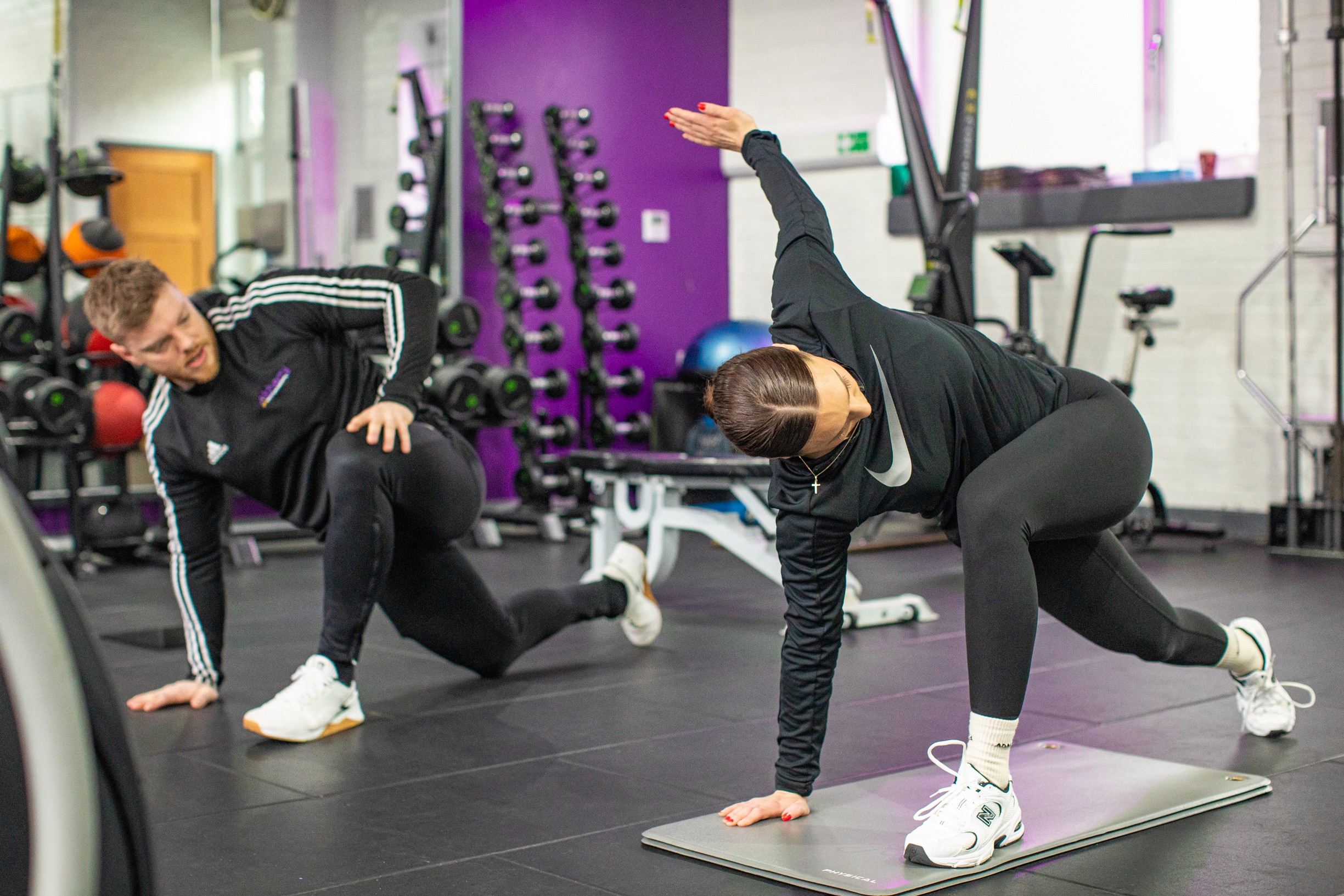
Yoga may look gentle, but it packs a punch for arm control and strength. Poses like plank, chaturanga, and dolphin enhance most muscles in the arms while improving flexibility.
Practising yoga a couple of times a week also helps your recovery, giving your body a chance to move freely without stiffness. Over time, you’ll notice your arms feeling more responsive in every movement.
Full-Body Resistance Training
Compound exercises like rows, pull-ups, and push presses engage multiple muscle groups while giving your arms extra work. More effort here teaches them to contract with control and endurance, which is exactly what makes an arm appear more toned, but not bulky.
How Often Should You Train Your Arms?
Frequency matters, but it depends on where you are in your fitness journey. Here’s a guide you can follow:
Level | Frequency | Pro Tips |
Beginner | 2 sessions per week | Focus on learning proper form and building a foundation. Think of this as giving your muscles a chance to adapt and respond without overwhelm. |
Intermediate | 3 sessions per week | Start adding more resistance and trying new variations, but keep control and precision as your priority. |
Advanced | 3 to 4 sessions per week | Mix heavy and light sessions, monitor fatigue, and ensure the recovery period is respected. |
Common Mistakes to Avoid During Arm Toning
Sometimes, lack of results isn’t about effort, but the small missteps that add up. Check yourself for:
Lifting weights that are too light prevents your muscles from being challenged and slows progress.
Swinging the weights instead of controlling them makes the exercise less effective.
Training every day without breaks hinders recovery and increases the risk of strain.
Ignoring proper nutrition limits muscle repair and slows fat loss.
Ultimately, smart training beats frequent exercise every time.
Kickstart Your Arm Workouts for Lasting Tone
Every training is a step toward toned arms, and our personal trainers are here to help you every step of the way. With structured programming and guided progression, we design personalised transformation plans that help you build stronger, more defined arms while fitting naturally into your routine.
Well-defined arms are not just about appearance; they support everyday strength for lifting, reaching, and carrying, while improving the mobility and overall shape of your arms.
However, achieving this balance of power and form requires the right approach. Many people find it confusing to know which exercises work best or how to structure a routine.
We totally get it. As personal trainers, we have members across Wilmslow and Alderley Edge coming to us for a clear and guided plan for arm toning.
The good news? It’s more attainable than you think. The better news? You don’t need extreme workouts to get there. Read along for easy, expert-approved ways and tips to get you started.
What Toned Arms Really Mean
When we talk about toned arms, it’s not about looking like a bodybuilder. Many people worry that lifting weights or doing targeted arm exercises will make them bulky, but that’s not how most bodies respond, especially for women.
Toning your arms is about creating lean muscle definition, improving strength, and enhancing their overall shape. Think of it like sculpting. It’s a balanced combination of fat reduction and muscle growth to make your arms firmer while maintaining their natural proportion.
What Happens When You Train Your Arms Properly
Strong, toned arms do more than look good. Effective training triggers several positive changes, like:
Enhanced posture: Sturdy arms and shoulders support your upper body, reducing strain in your back and neck.
Increased endurance: You can perform repetitive arm movements longer without tiring.
Smoother movements: Tasks that require arm coordination feel more unrestricted.
Prevent injuries: Toned arms and supporting muscles reduce the risks of overuse strains.
Mental boost: Completing workouts gives a sense of achievement, and seeing results can help you feel motivated and proactive about your health.
11 Most Effective Arm Toning Exercises
The following exercises are chosen to develop your arms from every angle. We’ll walk you through exactly what each movement does, how to execute with proper form, and how to safely progress.
Push-ups
A timeless favourite. Push-ups work your chest, shoulders, and arms simultaneously while bracing your abs. Maintain a straight line from head to heels, lowering your chest to the floor before pressing back up. Modifications like knee or incline push-ups make it accessible if you are new to this, and elevating your feet or adding a pause to increase the challenge.
Bicep Curls
Biceps curls focus on the front of your upper arms, improving functional strength to help lift and carry everyday objects. Stand with your feet shoulder-width apart and hold dumbbells at your sides. Keep your elbows close to your torso and curl the weights up slowly. Lower the weights under control to maintain muscle tension.
If dumbbells are unavailable, you can use a resistance band or even household items like water bottles.
Tricep Dips
This exercise is the go-to for sculpting the back of your arms, an area prone to sagging. Sit on a sturdy chair or bench and place your hands just outside your hips. Slide forward and lower your body until your elbows reach 90 degrees, then press back up. Keep your shoulders down and elbows tucked in. You can adjust the difficulty by bending your knees or straightening them.
Overhead Tricep Extension
A foundational tricep strengthening movement. This move focuses on the back of your arms while engaging your shoulders for stability. Hold a dumbbell, kettlebell, or resistance band and lower it slowly behind your head. Extend back up while keeping your core activated to avoid lower-back pain.
If you are a beginner, start with a light weight to maintain proper form, and eventually move to the single-arm version to increase the challenge and improve balance.
Lateral Raises
Lateral raises contract the deltoids to improve arm regulation and upper-body coordination. Stand with light dumbbells at your sides, raise your arms to shoulder height, then lower slowly. Keep a slight bend in your elbows to reduce joint stress. Small, precise lifts prevent injury and allow the shoulder muscles to activate fully.
Alternating Military Press
This exercise develops shoulder strength and enhances upper-arm stability through unilateral movement. Hold a weight in each hand at shoulder height, palms forward, and press one arm overhead while keeping the other bent, then switch. Beginners can start seated for support, while standing adds core engagement. Move slowly and focus on the weights to protect joints from straining.
Hammer Curls
A twist on the standard curl, hammer curls target both the biceps and the forearms and improve grip strength. Hold weights with palms facing each other, curl upwards, and lower slowly. To progress, try heavier weights or alternating arms, ensuring full control throughout the movements.
Cactus Arm
Think of opening a book with your arms. Bend your elbows at 90 degrees and lift them to shoulder height, forming a “goalpost” shape, then squeeze your shoulder blades together. This action engages the upper back and shoulder while improving posture.
Tricep Kickbacks
Tricep kickbacks are a great exercise to firm up the back arms while working on the torso for balance. Lean slightly forward with a straight back, keep your elbows tucked close to your body, then extend your arms behind you, pause, and lower slowly.
If you haven’t tried this routine before, start with low resistance, transitioning gradually into an advanced way by adding small pulses during lifts.
Curtsy Lunge with Bicep Curl
A full combo that keeps arms moving while challenging your legs. Step one leg diagonally behind you into a curtsy lunge while performing a bicep curl. Push back to standing by pushing the front heel, then switch sides.
This exercise challenges base support, strengthens glutes and quads, and activates your biceps simultaneously. For maximum effectiveness, keep your torso upright and regulated throughout
Pull-Aparts
Full stretch, major gain. Pull-aparts target the shoulder and upper back while enhancing arm control. Hold a band at chest level, pull until your arms are wide, then return slowly. Adjust the thickness of bands or weights of the machine to increase tension.
Expert Tips from Personal Trainers for Arm Toning
Simply going through every exercise is not enough to see meaningful results. Toned arms are effectively built from combining focused movement with smart pacing, complementary movements, and recovery.
Here are some tips our personal trainers consistently advise to get the most out of your arm toning journey:
Engage the Right Muscle Group
If you want toned arms, it’s important to know which muscles each exercise engages:
Biceps: Located at the front of your upper arm, these muscles bend the elbow and enhance lifting and pulling actions.
Triceps: Found at the back of the upper arms, they extend the elbow, improving pushing strength.
Deltoids (shoulders): These muscles surround the top of the arm, providing stability and helping the upper body move with precision. Strength here improves control during all overhead and lateral movements.
Brachioradialis: Running along the forearm from the elbow to the thumb that flexes during neutral grip movements.
Brachialis: Sitting beneath the biceps, it assists in arm bending and contributes to a fuller upper-arm appearance.
Wrist Flexors: Occupying the palm side of the forearm, flexors bend the wrist inward and stabilise the hand during lifting or gripping.
Wrist Extensors: Along the back side of the forearm, they straighten the wrist and support during presses and holding movements.
Condition Your Muscles
A proper warm-up makes every rep more effective and keeps your arms safe. It wakes them up, gets your joints moving smoothly, and primes your arms for action. When done, your movement feels sharper, your muscles respond better, and you make those arm toning exercises actually work the way they should.
Here’s a simple routine to get you prepped:
Arm Circles (30 to 60 seconds forward and backward): Start by gently rotating your shoulders in circles. Doing these movements loosens your deltoids and prepares them for presses and raises to come.
Shoulder Rolls (10 each way): Shake off tension and get your upper back moving freely. Your arms will thank you when the heavier exercises start.
Elbow and Wrist Rotation (10 each way): Mobilise those joints and give your forearms a head start for curls, presses, and push-ups.
Low Intensity Resistance Band Pull-Aparts (12 to 15 reps): Fire up your rear shoulders so your arms can move with coordination and power.
Spend just 5 to 10 minutes on this sequence, and your arms will feel ready to take on the main workout.
Take Time to Recharge
Rest is when muscles rebuild, not while you lift. That’s why you should treat your recovery like part of your training (because it is).
Here are simple recovery practices that support muscle repair:
Gently stretching your arms improves blood flow and reduces tightness.
Walking or light mobility work helps circulation and prepares your arms for the next workout without overloading them.
Rolling tight muscles on the arms releases tension, prevents soreness, and keeps joints relaxed.
Muscles repair with predictable rest cycles. Consistency in your daily schedule supports better recovery and responsiveness.
Switch Up Your Workout
If you want your fitness routine to really pay off, don’t stop and isolate on arm toning exercises. You can also experiment:
Cardio
Cardio exercise is not just for your heart; it helps reduce body fat, making your muscle definition more visible. Try brisk walking, cycling, rowing, boxing, or high-intensity interval training (HIIT) 2 to 3 times per week.
The key? Choose something that you enjoy so it becomes a consistent part of your regimen.
Yoga
Yoga may look gentle, but it packs a punch for arm control and strength. Poses like plank, chaturanga, and dolphin enhance most muscles in the arms while improving flexibility.
Practising yoga a couple of times a week also helps your recovery, giving your body a chance to move freely without stiffness. Over time, you’ll notice your arms feeling more responsive in every movement.
Full-Body Resistance Training
Compound exercises like rows, pull-ups, and push presses engage multiple muscle groups while giving your arms extra work. More effort here teaches them to contract with control and endurance, which is exactly what makes an arm appear more toned, but not bulky.
How Often Should You Train Your Arms?
Frequency matters, but it depends on where you are in your fitness journey. Here’s a guide you can follow:
Level | Frequency | Pro Tips |
Beginner | 2 sessions per week | Focus on learning proper form and building a foundation. Think of this as giving your muscles a chance to adapt and respond without overwhelm. |
Intermediate | 3 sessions per week | Start adding more resistance and trying new variations, but keep control and precision as your priority. |
Advanced | 3 to 4 sessions per week | Mix heavy and light sessions, monitor fatigue, and ensure the recovery period is respected. |
Common Mistakes to Avoid During Arm Toning
Sometimes, lack of results isn’t about effort, but the small missteps that add up. Check yourself for:
Lifting weights that are too light prevents your muscles from being challenged and slows progress.
Swinging the weights instead of controlling them makes the exercise less effective.
Training every day without breaks hinders recovery and increases the risk of strain.
Ignoring proper nutrition limits muscle repair and slows fat loss.
Ultimately, smart training beats frequent exercise every time.
Kickstart Your Arm Workouts for Lasting Tone
Every training is a step toward toned arms, and our personal trainers are here to help you every step of the way. With structured programming and guided progression, we design personalised transformation plans that help you build stronger, more defined arms while fitting naturally into your routine.
Table of Content
Frequently Asked Questions
Frequently Asked Questions
How long does it take to get toned arms?
What part of the arm is the hardest to tone?
Is training arms every day a good idea?
How many reps should you do to tone arms?
Can you tone arms without weights?



Alchemy PT are UK’s number one personal trainers. Situated in central Wilmslow, we have over 2,000 square feet of space for our Personal Training Studio.
Call Us
Alchemy - © Copyright 2026 |
Website by ARENA
Alchemy PT are UK’s number one personal trainers. Situated in central Wilmslow, we have over 2,000 square feet of space for our Personal Training Studio.
Call Us
Alchemy - © Copyright 2026 |
Website by ARENA
Alchemy PT are UK’s number one personal trainers. Situated in central Wilmslow, we have over 2,000 square feet of space for our Personal Training Studio.
Call Us
Alchemy - © Copyright 2026 |
Website by ARENA
Alchemy PT are UK’s number one personal trainers. Situated in central Wilmslow, we have over 2,000 square feet of space for our Personal Training Studio.
Call Us
Alchemy - © Copyright 2026 |
Website by ARENA