What Is a Corrective Exercise Specialist? Benefits and Examples
What Is a Corrective Exercise Specialist? Benefits and Examples
Published Date:
Published Date:
Last Updated:
Last Updated:

Key Takeaways
A corrective exercise specialist identifies and fixes underlying muscle imbalances and joint dysfunctions rather than just treating superficial symptoms.
Meticulous movement programming builds dynamic stability, allowing individuals to progress safely in strength and endurance without triggering injury.
Utilising targeted protocols unlocks fluid, pain-free joint movement, improving daily physical performance across all stages of life.
Modern life has fundamentally altered the way our bodies move. We spend hours hunched over laptops, commuting in cramped car seats, and peering down at smart screens. Over time, these repetitive, sedentary habits force certain muscles to overwork and become chronically tight, while causing other muscle groups to switch off and weaken entirely.
When you bring these underlying structural imbalances into the gym, you often end up layering heavy loads onto faulty movement patterns. This can contribute to lower back discomfort, persistent knee pain, and shoulder tightness over time.
If you want to train hard, lift heavier, and reduce your risk of pain and injury as you age, standard exercise routines are rarely enough. You need to identify exactly where your body’s weak link is. This specialised field of human performance is where corrective exercise plays an essential role, guided by a qualified professional known as a corrective exercise specialist.
What Is a Corrective Exercise Specialist?
A corrective exercise specialist is a highly trained fitness professional who focuses on identifying the root causes of structural imbalances, postural deviations, and movement dysfunctions. Rather than merely writing a generic workout plan designed to burn calories or build surface muscle, this specialist analyses how your joints, muscles, and central nervous system interact.
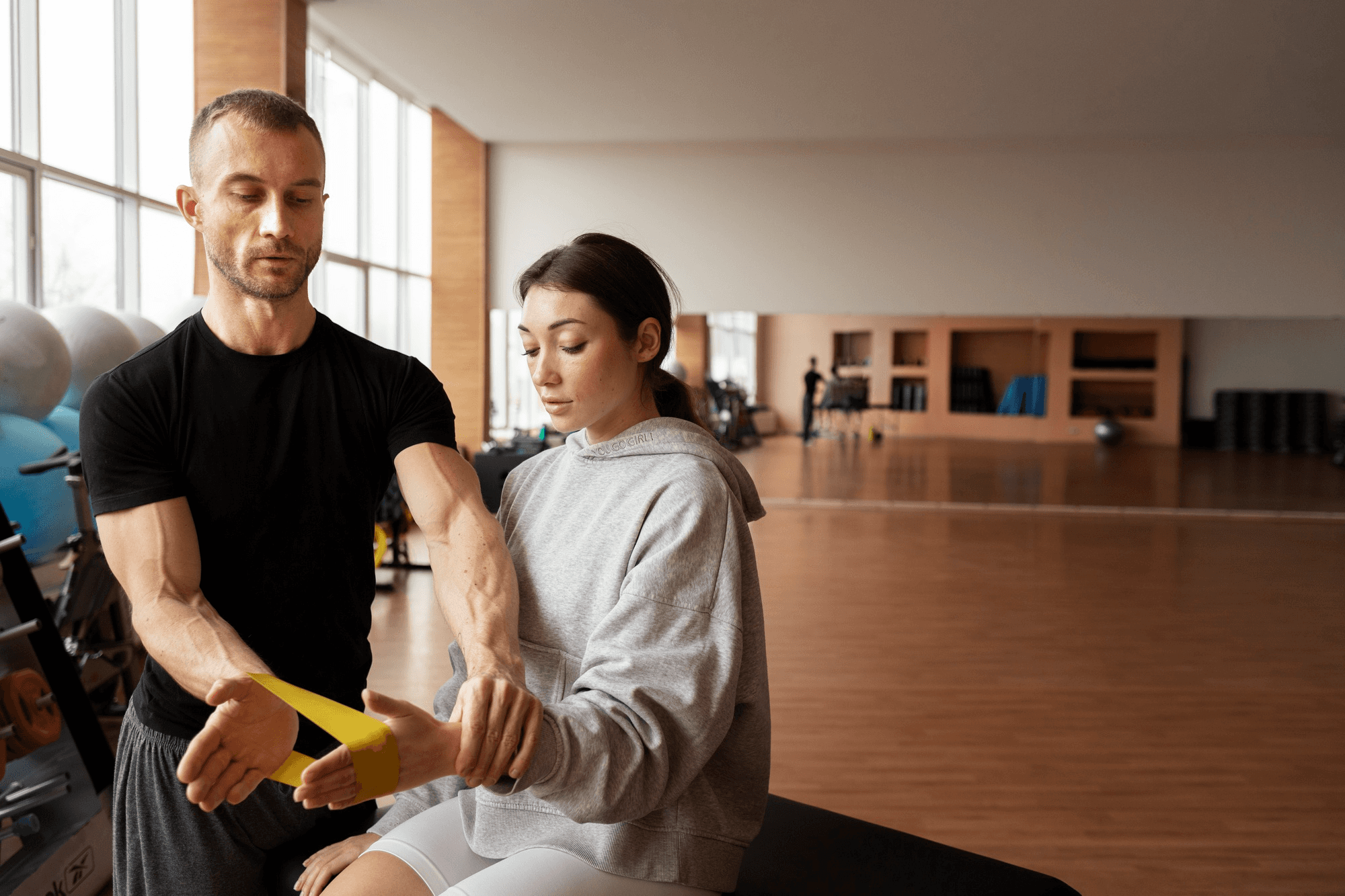
Think of them as the structural engineer of your physical fitness journey. While a traditional personal trainer focuses primarily on helping you reach goals like hypertrophy, fat loss, or aerobic conditioning, a specialist ensures your foundational biomechanics are sound enough to handle those physical demands safely.
They hold specialised credentials from globally recognised institutions, such as the National Academy of Sports Medicine (NASM) Corrective Exercise Specialization (CES) or the International Sports Sciences Association (ISSA). These certifications require deep expertise in functional anatomy, kinesiology (the study of human movement), and advanced human movement screening techniques.
The Four-Step Corrective Exercise Framework
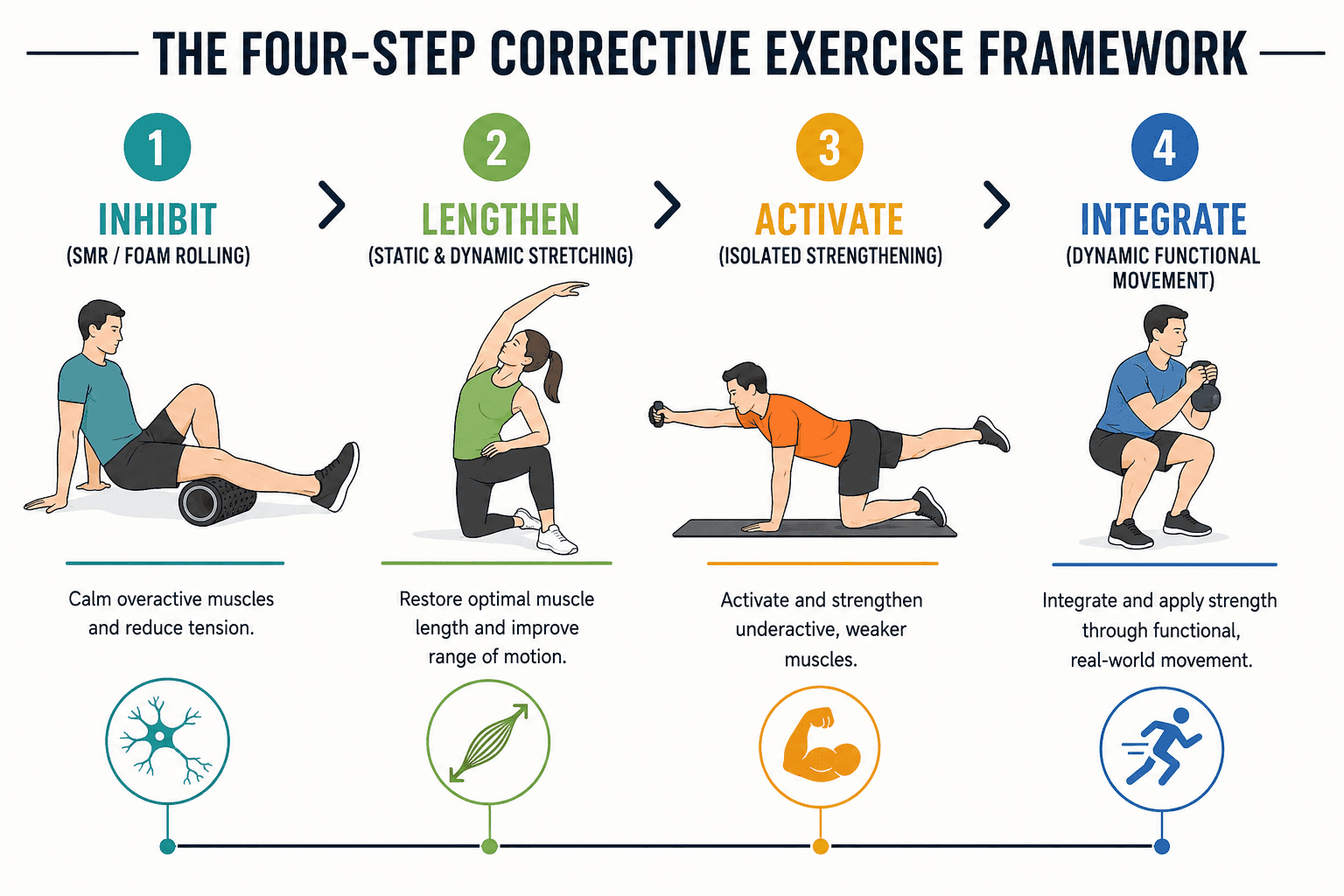
An movement specialist does not rely on guesswork. Instead, they utilise a highly structured, evidence-based, four-step programming framework designed to systematically retrain your neuromuscular system.
1. Inhibit (SMR / Foam Rolling)
The first phase involves calming down overactive, hypertonic muscles that are dominating a joint. Using techniques like Self-Myofascial Release (SMR), which is commonly performed with foam rollers, massage balls, or targeted percussion tools, the specialist applies sustained pressure to specific tissues. This reduces neural tension, muscle tension and helps improve tissue mobility.
2. Lengthen (Static and Dynamic Stretching)
Once the overactive muscles are neurologically quietened, they must be physically lengthened. Through specific static stretching or contract-relax protocols, the specialist helps restore the muscle tissue's optimal resting length, helping improve the available range of motion within the restricted joint.
3. Activate (Isolated Strengthening)
With the tight muscles relaxed and lengthened, the focus shifts to the underactive, weakened counterpart muscles. The specialist introduces highly isolated exercises targeting these precise tissues. This step builds essential neural drive, essentially "waking up" the muscles so they can support the skeletal frame correctly.
4. Integrate (Dynamic Functional Movement)
The final step brings the entire system together. The specialist transitions you from isolated exercises to dynamic, multi-joint functional movements. This teaches your brain and muscle groups to fire in perfect, synchronised harmony during real-world movements like squatting, lunging, pushing, or pulling.
Major Benefits of Corrective Movement Exercises
Investing time into corrective programming yields far-reaching benefits that extend well beyond the walls of a premium training facility.
1. Eradicating Chronic Aches and Pains
Many people accept nagging lower back soreness, tight neck muscles, or clicking shoulders as inevitable side effects of aging or hard training. In reality, these are often just warning lights indicating that your body is compensating for a structural fault. Correcting these movement patterns can help reduce unnecessary stress on your joints, allowing you to live and train completely pain-free.
2. Accelerated Strength and Performance Gains
Muscular imbalances limit your top-tier strength performance. If your glutes are underactive, your lower back and hamstrings have to overwork during a deadlift, severely capping the maximum weight you can safely move. Fixing these weak links through strength training can improve movement efficiency and support long-term strength gains.
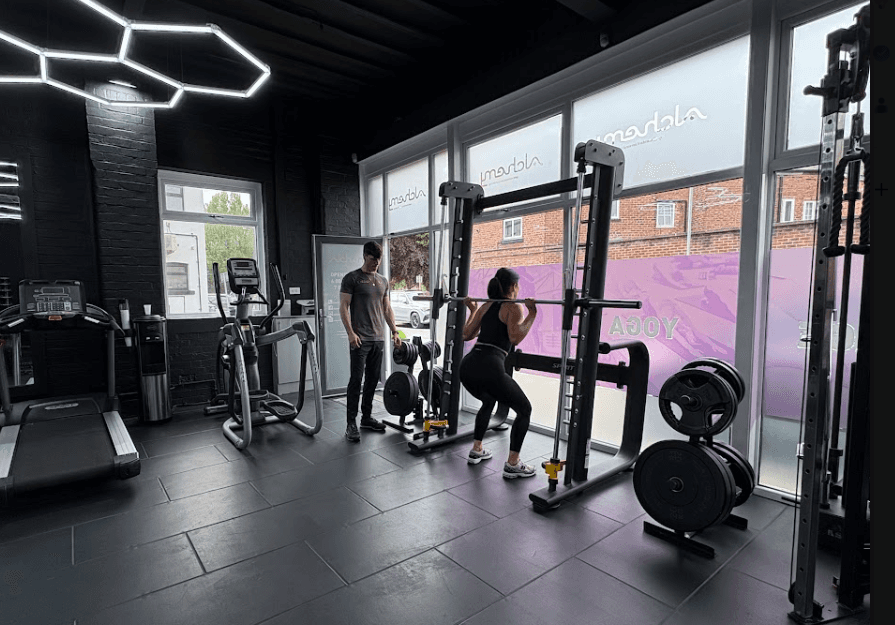
3. Long-Term Injury Prevention
By correcting faulty movement patterns before you introduce heavy resistance or high-intensity cardiovascular training, you protect your body from structural wear and tear. This proactive approach prevents acute microtrauma from progressing into chronic orthopedic issues.
4. Optimised Posture and Spatial Awareness
Whether you are sitting at a desk or simply walking through Alderley Edge, corrective programming can improve your posture during everyday activities. It realigns your spine, balances your pelvis, and enhances your overall proprioception (your brain's ability to sense where your limbs are in space).
Examples of Corrective Exercise
To better understand how these principles work in practice, let's explore two incredibly common postural distortions that specialists encounter daily.
Example A: Upper Cross Syndrome (The Desk Worker Posture)
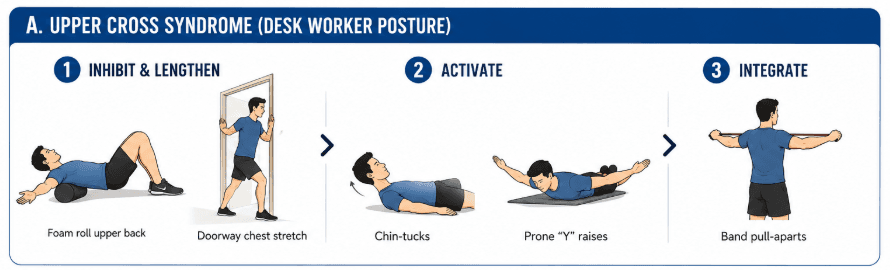
Characterised by a forward head position, rounded shoulders, and an exaggerated curve in the upper spine.
Overactive muscles: Pectoralis major/minor (chest) and upper trapezius/levator scapulae (neck/upper back).
Underactive muscles: Deep cervical flexors (neck stabilisers) and lower trapezius/rhomboids (mid-back muscles that pull your shoulder blades down and back).
The corrective strategy: The specialist will guide you in inhibiting and lengthening the chest and upper neck muscles, followed by targeted activation exercises such as chin-tucks and prone "Y" raises to strengthen the mid-back and stabilise your shoulders.
Example B: Lower Cross Syndrome (Anterior Pelvic Tilt)
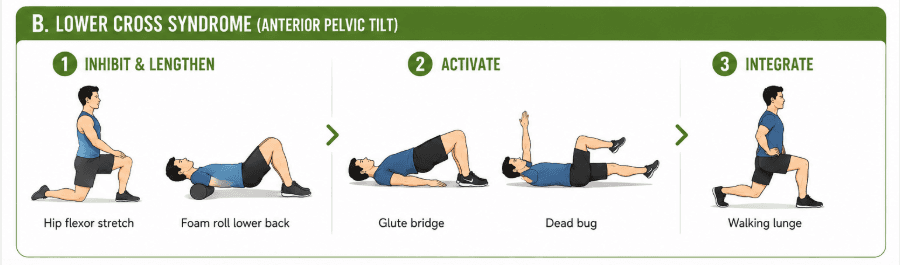
Characterised by an excessive forward tilt of the pelvis, an over-arched lower back, and a protruding abdomen. This is highly common in individuals who spend long hours sitting.
Overactive muscles: Hip flexors (iliopsoas) and erector spinae (lower back muscles).
Underactive muscles: Gluteus maximus (buttocks) and rectus abdominis/obliques (core).
The corrective strategy: This strategy requires foam rolling and stretching the tight hip flexors and lower back, along with targeted activation of the glutes via floor bridges and deep core stabilisation through dead-bug variations.
Finding Expert Coaching in Your Area
While self-guided foam rolling and stretching can offer temporary relief, achieving true structural realignment requires elite, one-to-one expertise. A true movement professional doesn't guess; they measure. They map out your unique structural architecture to build a highly targeted plan tailored to your body.
For residents looking for an experienced personal trainer in Wilmslow or seeking premium biomechanical coaching near Alderley Edge, choosing a dedicated one-to-one training environment provides the ultimate setting for structural transformation. This high-tier, individual focus allows you to rebuild your physical foundations safely, clearing the path for sustainable, lifelong fitness progress.
Modern life has fundamentally altered the way our bodies move. We spend hours hunched over laptops, commuting in cramped car seats, and peering down at smart screens. Over time, these repetitive, sedentary habits force certain muscles to overwork and become chronically tight, while causing other muscle groups to switch off and weaken entirely.
When you bring these underlying structural imbalances into the gym, you often end up layering heavy loads onto faulty movement patterns. This can contribute to lower back discomfort, persistent knee pain, and shoulder tightness over time.
If you want to train hard, lift heavier, and reduce your risk of pain and injury as you age, standard exercise routines are rarely enough. You need to identify exactly where your body’s weak link is. This specialised field of human performance is where corrective exercise plays an essential role, guided by a qualified professional known as a corrective exercise specialist.
What Is a Corrective Exercise Specialist?
A corrective exercise specialist is a highly trained fitness professional who focuses on identifying the root causes of structural imbalances, postural deviations, and movement dysfunctions. Rather than merely writing a generic workout plan designed to burn calories or build surface muscle, this specialist analyses how your joints, muscles, and central nervous system interact.
Think of them as the structural engineer of your physical fitness journey. While a traditional personal trainer focuses primarily on helping you reach goals like hypertrophy, fat loss, or aerobic conditioning, a specialist ensures your foundational biomechanics are sound enough to handle those physical demands safely.
They hold specialised credentials from globally recognised institutions, such as the National Academy of Sports Medicine (NASM) Corrective Exercise Specialization (CES) or the International Sports Sciences Association (ISSA). These certifications require deep expertise in functional anatomy, kinesiology (the study of human movement), and advanced human movement screening techniques.
The Four-Step Corrective Exercise Framework
An movement specialist does not rely on guesswork. Instead, they utilise a highly structured, evidence-based, four-step programming framework designed to systematically retrain your neuromuscular system.
1. Inhibit (SMR / Foam Rolling)
The first phase involves calming down overactive, hypertonic muscles that are dominating a joint. Using techniques like Self-Myofascial Release (SMR), which is commonly performed with foam rollers, massage balls, or targeted percussion tools, the specialist applies sustained pressure to specific tissues. This reduces neural tension, muscle tension and helps improve tissue mobility.
2. Lengthen (Static and Dynamic Stretching)
Once the overactive muscles are neurologically quietened, they must be physically lengthened. Through specific static stretching or contract-relax protocols, the specialist helps restore the muscle tissue's optimal resting length, helping improve the available range of motion within the restricted joint.
3. Activate (Isolated Strengthening)
With the tight muscles relaxed and lengthened, the focus shifts to the underactive, weakened counterpart muscles. The specialist introduces highly isolated exercises targeting these precise tissues. This step builds essential neural drive, essentially "waking up" the muscles so they can support the skeletal frame correctly.
4. Integrate (Dynamic Functional Movement)
The final step brings the entire system together. The specialist transitions you from isolated exercises to dynamic, multi-joint functional movements. This teaches your brain and muscle groups to fire in perfect, synchronised harmony during real-world movements like squatting, lunging, pushing, or pulling.
Major Benefits of Corrective Movement Exercises
Investing time into corrective programming yields far-reaching benefits that extend well beyond the walls of a premium training facility.
1. Eradicating Chronic Aches and Pains
Many people accept nagging lower back soreness, tight neck muscles, or clicking shoulders as inevitable side effects of aging or hard training. In reality, these are often just warning lights indicating that your body is compensating for a structural fault. Correcting these movement patterns can help reduce unnecessary stress on your joints, allowing you to live and train completely pain-free.
2. Accelerated Strength and Performance Gains
Muscular imbalances limit your top-tier strength performance. If your glutes are underactive, your lower back and hamstrings have to overwork during a deadlift, severely capping the maximum weight you can safely move. Fixing these weak links through strength training can improve movement efficiency and support long-term strength gains.
3. Long-Term Injury Prevention
By correcting faulty movement patterns before you introduce heavy resistance or high-intensity cardiovascular training, you protect your body from structural wear and tear. This proactive approach prevents acute microtrauma from progressing into chronic orthopedic issues.
4. Optimised Posture and Spatial Awareness
Whether you are sitting at a desk or simply walking through Alderley Edge, corrective programming can improve your posture during everyday activities. It realigns your spine, balances your pelvis, and enhances your overall proprioception (your brain's ability to sense where your limbs are in space).
Examples of Corrective Exercise
To better understand how these principles work in practice, let's explore two incredibly common postural distortions that specialists encounter daily.
Example A: Upper Cross Syndrome (The Desk Worker Posture)
Characterised by a forward head position, rounded shoulders, and an exaggerated curve in the upper spine.
Overactive muscles: Pectoralis major/minor (chest) and upper trapezius/levator scapulae (neck/upper back).
Underactive muscles: Deep cervical flexors (neck stabilisers) and lower trapezius/rhomboids (mid-back muscles that pull your shoulder blades down and back).
The corrective strategy: The specialist will guide you in inhibiting and lengthening the chest and upper neck muscles, followed by targeted activation exercises such as chin-tucks and prone "Y" raises to strengthen the mid-back and stabilise your shoulders.
Example B: Lower Cross Syndrome (Anterior Pelvic Tilt)
Characterised by an excessive forward tilt of the pelvis, an over-arched lower back, and a protruding abdomen. This is highly common in individuals who spend long hours sitting.
Overactive muscles: Hip flexors (iliopsoas) and erector spinae (lower back muscles).
Underactive muscles: Gluteus maximus (buttocks) and rectus abdominis/obliques (core).
The corrective strategy: This strategy requires foam rolling and stretching the tight hip flexors and lower back, along with targeted activation of the glutes via floor bridges and deep core stabilisation through dead-bug variations.
Finding Expert Coaching in Your Area
While self-guided foam rolling and stretching can offer temporary relief, achieving true structural realignment requires elite, one-to-one expertise. A true movement professional doesn't guess; they measure. They map out your unique structural architecture to build a highly targeted plan tailored to your body.
For residents looking for an experienced personal trainer in Wilmslow or seeking premium biomechanical coaching near Alderley Edge, choosing a dedicated one-to-one training environment provides the ultimate setting for structural transformation. This high-tier, individual focus allows you to rebuild your physical foundations safely, clearing the path for sustainable, lifelong fitness progress.
Table of Content
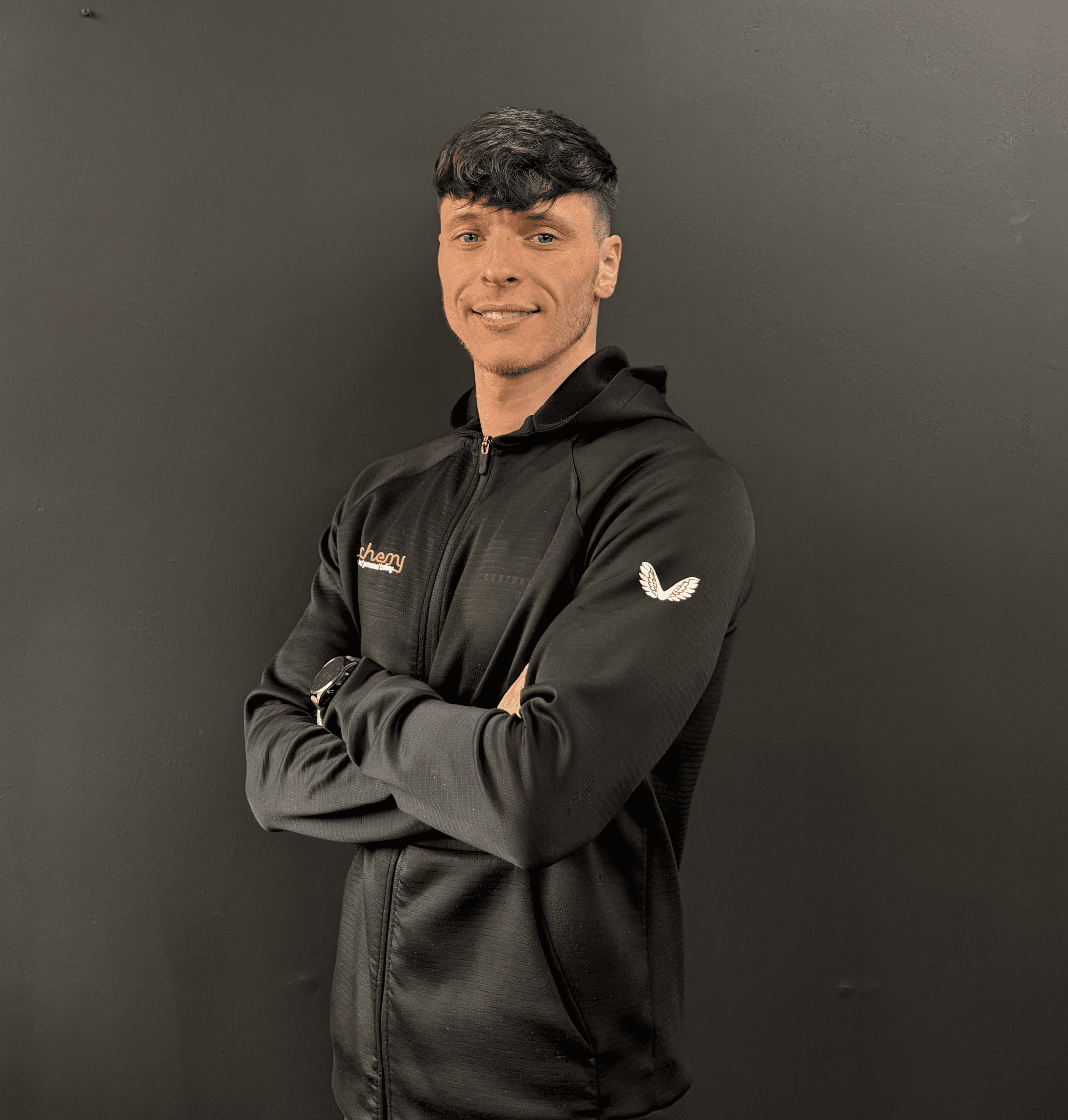
Written by
Owen Trainor
Owen Trainor
Master Personal Trainer
Owen Trainor is a Master Personal Trainer at Alchemy, drawing on his background as a top-level football player and amateur boxing competitor to bring a powerful, sports-specific approach to training. He tailors every session to each client's evolving needs, blending nutritional monitoring with adaptable workout plans to drive consistent, measurable results. Owen's motivating, supportive style ensures clients stay focused and empowered throughout their transformation journey.
Frequently Asked Questions
Frequently Asked Questions
How is a corrective exercise specialist different from a physiotherapist?
How long does it take to see results from corrective programming?
Can I still lift heavy weights while doing corrective exercises?
How do I know if I actually need corrective exercise?
Can corrective exercises fix long-term postural issues?



Alchemy PT are UK’s number one personal trainers. Situated in central Wilmslow, we have over 2,000 square feet of space for our Personal Training Studio.
WhatsApp Us
Call Us
Alchemy - © Copyright 2026 |
Website by ARENA
Alchemy PT are UK’s number one personal trainers. Situated in central Wilmslow, we have over 2,000 square feet of space for our Personal Training Studio.
WhatsApp Us
Call Us
Alchemy - © Copyright 2026 |
Website by ARENA
Alchemy PT are UK’s number one personal trainers. Situated in central Wilmslow, we have over 2,000 square feet of space for our Personal Training Studio.
WhatsApp Us
Call Us
Alchemy - © Copyright 2026 |
Website by ARENA
Alchemy PT are UK’s number one personal trainers. Situated in central Wilmslow, we have over 2,000 square feet of space for our Personal Training Studio.
WhatsApp Us
Call Us
Alchemy - © Copyright 2026 |
Website by ARENA