
Key Takeaways
Weight lifting helps beginners develop strength, build muscle and support fat loss when combined with balanced nutrition and consistent physical activity.
Resistance machines, free weights and bodyweight exercises can all contribute to an effective beginner's programme.
Two to three weekly sessions can provide a practical starting point, allowing sufficient time for recovery and progression.
Working with a personal trainer can help beginners select appropriate exercises, learn correct form and follow a programme suited to their individual goals.
Weight lifting can be a useful addition to your gym routine, whether you're new to exercise or returning after a break. However, getting started can raise questions about which exercises to try, what equipment to use and how to structure your sessions.
In this guide, you'll learn the basics of weight lifting at the gym, including how to get started, which exercises to consider and how to approach your training as a beginner.
What Is Weight Lifting and What Are Its Benefits?

Weight lifting is a form of resistance training that challenges your muscles using external weights, such as dumbbells and barbells, or your own body weight. Over time, these exercises encourage physical adaptations that help you develop strength and improve overall fitness.
Beyond muscle development, regular resistance training offers several benefits:
Supports weight management: Helps preserve lean tissue while working towards reducing body fat.
Improves metabolic health: Regular exercise can improve insulin sensitivity and help your body manage blood glucose.
Supports bone health: Appropriately progressed resistance exercise helps maintain bone strength and encourages tendon adaptation.
Improves functional fitness: Makes everyday activities, including carrying groceries, climbing stairs and lifting objects, easier to manage.
These benefits make weight lifting a valuable part of a balanced fitness routine at different stages of life.
How to Start Weight Lifting at the Gym as a Beginner
Starting with a structured approach helps you understand how exercises work and how much resistance your body can manage. Focus on the following fundamentals before increasing the difficulty of your workouts.
Get Guidance on Proper Lifting Form
Before increasing the resistance, learn how to perform each exercise with the correct technique. A personal trainer can demonstrate each movement, explain proper positioning and guide you through the correct execution.
Pay attention to how your body responds during each repetition. This awareness, often called the mind-muscle connection, helps you focus on the intended areas rather than simply moving the weight from one position to another.
A personal trainer in Wilmslow can also assess your technique and recommend adjustments based on your current abilities, mobility and fitness goals.

Choose the Right Starting Weight
There is no universal starting weight because your capabilities vary depending on the exercise and your fitness experience. Choose a resistance that allows you to complete approximately 8 to 12 controlled repetitions without compromising your technique.
You can also use Rate of Perceived Exertion (RPE) to assess how challenging an exercise feels. On a scale of 1 to 10, beginners can initially aim for around 6 to 7, leaving approximately two or three repetitions in reserve.
Understand Sets, Reps and Progressive Overload
Three basic training terms will help you follow a structured programme:
Repetition (rep): One complete movement of an exercise.
Set: A group of consecutive repetitions.
Progressive overload: Gradually increasing training demands through additional resistance, repetitions or sets as your strength improves.
For example, you might initially perform two sets of 10 squats before gradually increasing the weight or number of repetitions as the exercise becomes easier.
What Equipment Do You Need for Weight Lifting at the Gym?
Gyms offer several types of equipment for weight lifting, each suited to different exercises and training needs.
Equipment type | Examples | How it works | Main benefit |
Resistance machines | Leg press, chest press, lat pulldown, seated row | Provide guided movement paths and adjustable resistance | Help practise controlled movements |
Free weights | Dumbbells, barbells, kettlebells, weight plates | Allow a greater range of movement and require you to control the load | Develop strength and coordination |
Bodyweight exercises | Push-ups, squats, lunges, planks | Use your own body weight as resistance | Establish foundational movement patterns |
Trainer tip: There is no requirement to master machines before using dumbbells. Equipment selection should depend on the exercise, your confidence, movement ability and training goals.
What Are the Best Weight Lifting Exercises for Beginners?
Beginners can start with compound exercises that target multiple muscle groups and develop fundamental movement patterns. Here are six options to consider:
Exercise | Main muscles worked | Primary benefit |
Goblet squats | Quadriceps and glutes | Develops lower-body strength |
Dumbbell chest press | Chest, shoulders and triceps | Builds upper-body pushing strength |
Seated cable rows | Back and biceps | Develops pulling strength |
Romanian deadlifts | Hamstrings and glutes | Practises hip hinging |
Lat pulldowns | Back and biceps | Develops vertical pulling strength |
Planks | Core muscles | Improves core stabilisation |
These exercises can be adapted to suit different experience levels and physical capabilities. For example, your personal trainer might adjust squat depth or introduce a supported variation if you have difficulty maintaining a comfortable position.
Trainer tip: Focus on learning each movement pattern before increasing the weight. Choose modifications based on your current mobility, coordination and ability to perform the exercise comfortably.

How Does Weight Lifting Burn Fat and Build Muscle?
Weight lifting can support changes in body composition by helping reduce body fat while maintaining or developing lean tissue. However, the results depend on your training approach, nutritional intake and recovery. Your primary goal also influences how you structure your programme.
Weight Lifting for Weight Loss
If your goal is to reduce body fat, resistance training can help preserve lean tissue while you work towards a calorie deficit. This matters because losing weight does not necessarily mean losing fat alone.
Combining regular training with everyday physical activity and balanced nutrition can support sustainable weight management. However, lifting weights cannot selectively remove fat from specific areas, such as your stomach or thighs.
Weight Lifting for Muscle Building
Developing muscle requires progressively challenging your body through resistance exercise. Mechanical tension and appropriate training volume stimulate adaptations that contribute to muscle growth over time.
Adequate protein and overall energy intake support this process, while sufficient sleep and recovery allow your body to adapt.
Weight Lifting for Weight Loss vs Muscle Building
The two goals can involve similar exercises, but their nutritional and training priorities may differ.
Factor | Weight loss | Muscle building |
Primary goal | Reduce body fat while preserving lean tissue | Increase muscle size |
Training approach | Resistance exercises alongside regular activity | Progressive resistance training |
Nutrition | Moderate calorie deficit with adequate protein | Sufficient energy and protein |
Progress tracking | Body composition and strength | Muscle development and performance |
Recovery | Helps maintain consistency | Supports muscle repair and adaptation |
Both objectives benefit from consistency, appropriate nutrition and adequate recovery. The main distinction is how these elements are adjusted to support your desired outcome.
How Often Should Beginners Lift Weights?
For many beginners, two to three weight lifting sessions per week provide a manageable starting point. Full-body workouts are a practical option because they cover the major muscle groups without requiring a complicated schedule.
A sample weekly schedule could look like this:
Day | Training focus |
Monday | Full-body training |
Wednesday | Full-body training |
Friday | Full-body training |
Allow enough time for your body to recover between sessions. Exercising five or six days a week is not necessarily more beneficial, especially when you're still adjusting to regular resistance exercise.
Trainer tip: Focus on building a schedule you can maintain consistently rather than maximising your gym visits. Gradual progression is more sustainable than doing too much too soon.
Weight Lifting Safety Tips: How to Avoid Common Beginner Mistakes
Following basic safety practices can help you get more from your workouts while reducing the risk of avoidable training problems.

Weight Lifting Safety Tips
Warm up: Spend approximately 5 to 10 minutes preparing with light aerobic activity and suitable movements.
Maintain proper form: Use controlled movements and an appropriate range of motion.
Breathe correctly: Exhale during the lifting phase and inhale while lowering the weight. Avoid unnecessarily holding your breath.
Rest between sets: Allow sufficient recovery, with around 60 seconds as a practical starting point, adjusting according to exercise intensity.
Wear suitable footwear: Choose stable, comfortable shoes with adequate grip.
Stay hydrated: Drink water throughout your workout.
Common Mistakes to Avoid
Ego lifting: Choosing heavier weights at the expense of proper technique.
Using momentum: Swinging weights instead of controlling each repetition.
Skipping warm-ups: Starting demanding exercises without preparing.
Ignoring recovery: Training the same muscle groups intensely on consecutive days.
Ignoring pain: Continuing an exercise that causes sharp or unusual discomfort.
A controlled repetition with appropriate resistance is more useful than lifting heavier weights with compromised technique. Stop exercises that cause sharp or unusual pain.
How Personalised Training Can Help You Progress
Individual coaching can help you follow a programme suited to your fitness level, mobility, movement mechanics and experience. A personal trainer can adjust exercise selection, resistance and difficulty as your capabilities develop.
If you're looking for a personal trainer in Wilmslow, consider their qualifications, coaching experience and the level of individual guidance they provide. Private personal training offers one-to-one instruction, while small group personal training combines professional guidance with the support of a shared setting.
For beginners in Wilmslow and Alderley Edge, a well-equipped fitness studio with experienced trainers can provide a supportive environment to learn proper techniques, build confidence and establish consistent exercise habits.
Getting Started with Weight Lifting at the Gym
Weight lifting is a skill you can develop through practice, guidance and gradual progression. Treat your first few weeks as a learning phase rather than a test of strength. By prioritising proper technique, consistent training, balanced nutrition and recovery, you can build a foundation for lasting strength and improved physical fitness.
Table of Content
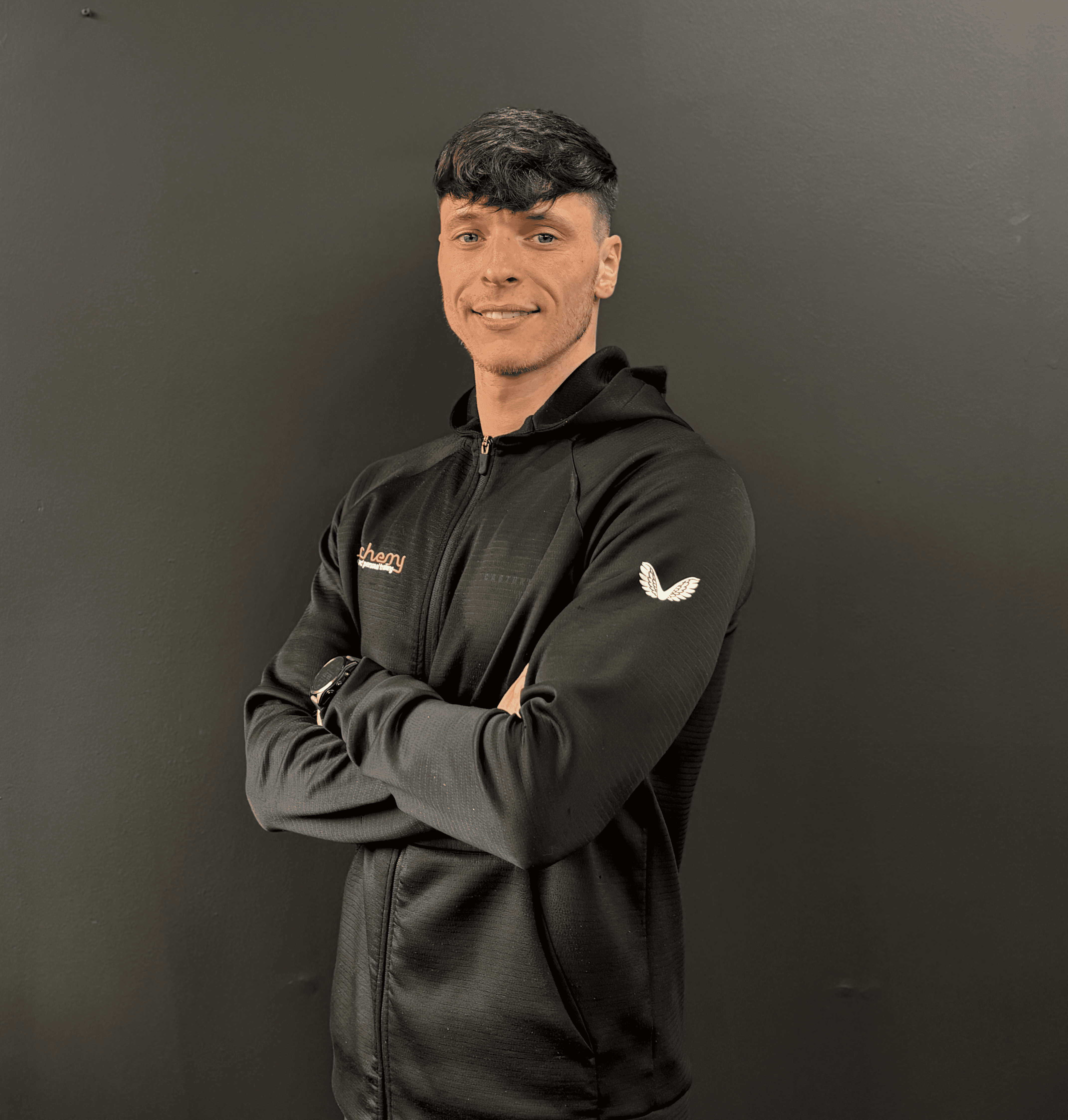
Written by
Master Personal Trainer
Owen Trainor is a Master Personal Trainer at Alchemy, drawing on his background as a top-level football player and amateur boxing competitor to bring a powerful, sports-specific approach to training. He tailors every session to each client's evolving needs, blending nutritional monitoring with adaptable workout plans to drive consistent, measurable results. Owen's motivating, supportive style ensures clients stay focused and empowered throughout their transformation journey.


